 editer@organickheti.in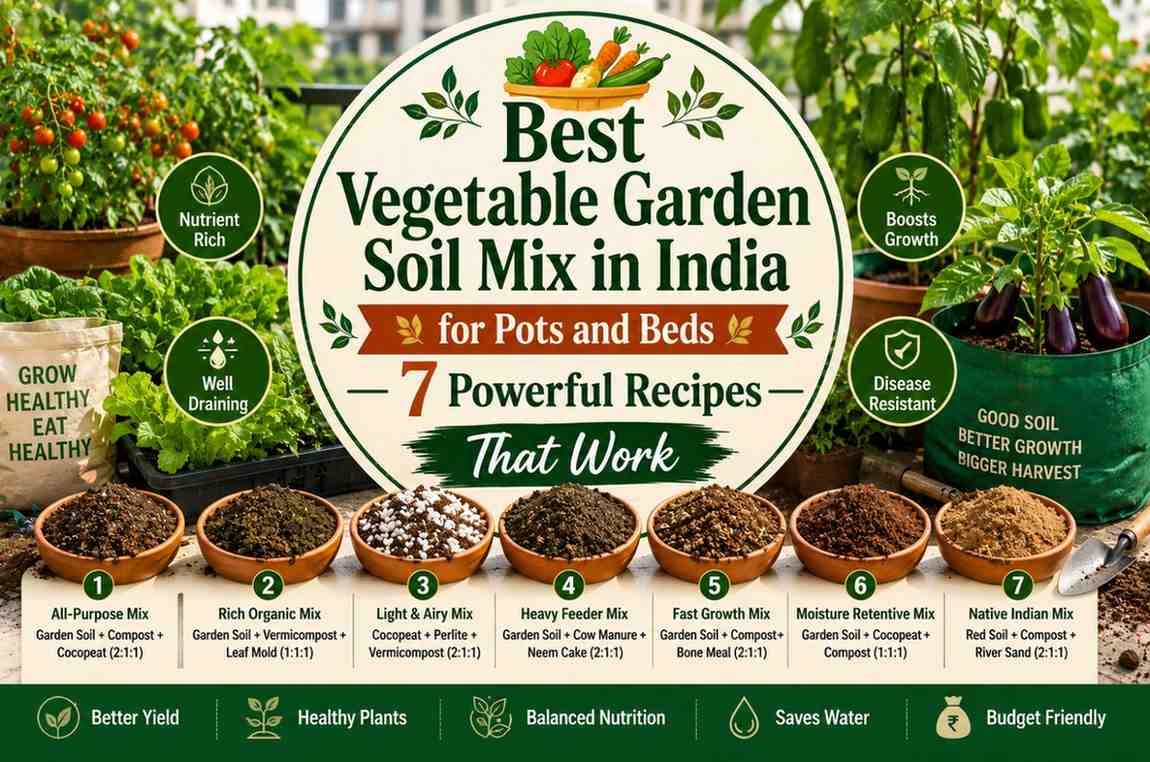
Introduction
The single biggest reason most Indian home gardens underperform has nothing to do with seeds, sunlight, or watering. It has everything to do with the soil. Using the right vegetable garden soil mix in India for pots and beds is the most important investment you can make—and the good news is that the best recipes use ingredients that are inexpensive, locally available, and incredibly effective.
Whether you are growing tomatoes in Mumbai on a terrace or managing raised beds in a Bangalore backyard, this guide gives you the exact soil recipes, ingredient explanations, and practical tips that will transform how fast and how abundantly your vegetables grow.
Why Standard Garden Soil Fails Indian Vegetable Growers
Before building the perfect vegetable garden soil mix in India for pots and beds, it is critical to understand why plain garden soil consistently fails—especially in containers.
The problems with plain Indian garden soil in pots:
Standard red soil, black cotton soil, or alluvial soil found across India is designed by nature for open ground, not containers. When put in a pot, it:
- Compacts heavily with every watering, suffocating roots
- Becomes waterlogged easily, causing root rot
- Dries into a hard, hydrophobic crust in summer
- Lacks sufficient microbial life for container environments
- Is too dense for the fine root systems of vegetable seedlings
For raised beds, plain soil often lacks the organic matter, drainage capacity, and nutrient balance needed for intensive vegetable production.
This is exactly why building a custom vegetable garden soil mix in India for pots and beds using specific, tested ingredients is non-negotiable for anyone serious about growing food at home.
The 5 Core Ingredients of Any Great Indian Vegetable Soil Mix
Every excellent vegetable garden soil mix in India for pots and beds is built from a combination of these foundational components. Understanding each one helps you customize recipes for your specific plants and conditions.
1. Cocopeat (Coconut Coir)
India is one of the world’s largest producers of coco peat, making it the most accessible and affordable soil amendment available. Coco peat:
- Holds up to 8–10 times its weight in water while remaining aerated
- Has a near-neutral pH (5.8–6.5), ideal for most vegetables
- Is naturally anti-fungal and resistant to pests
- Is a sustainable by-product of coconut processing
For any vegetable garden soil mix in India for pots and beds, coco peat is the single most important amendment you can add. It is available at virtually every nursery across India for ₹30–₹80 per kilogram.
2. Vermicompost
Vermicompost is worm-processed organic matter and is among the most nutrient-dense soil amendments available. Unlike chemical fertilizers that provide a quick flush of nutrients, vermicompost releases nutrients slowly and steadily—exactly what vegetable roots need. It also contains beneficial microorganisms that suppress soil diseases.
The ideal ratio in any vegetable garden soil mix in India for pots and beds is 20–30% vermicompost by volume.
3. Garden Soil or Red Soil
A base of natural soil anchors the mix, provides mineral diversity, and gives roots something to grip. Use local red soil or garden soil — avoid construction soil or soil from roadsides, which may contain contaminants.
In areas where black cotton soil dominates (Maharashtra, Telangana, and Madhya Pradesh), limit its proportion to 20% maximum, as it swells and cracks dramatically with moisture changes.
4. Neem Cake (Neem Khali)
Neem cake is the solid residue left after extracting neem oil. It is a powerful natural pesticide and soil conditioner. Adding it to your vegetable garden soil mix in India for pots and beds:
- Repels nematodes, soil-dwelling insects, and fungal pathogens
- Provides slow-release nitrogen (NPK ratio approximately 4:1:1)
- Improves soil microbial activity
Use approximately 1 handful (50 g) per 10 liters of soil mix.
5. Perlite or Coarse River Sand
Perlite (volcanic glass granules) or coarse river sand improves drainage and prevents compaction. Perlite is particularly valuable for container mixes since it is lightweight and does not break down. River sand is heavier but far more affordable — a critical consideration for large container setups.
Include 10–15% perlite or 20% coarse sand in your vegetable garden soil mix India for pots and beds for optimal drainage.
The 7 Proven Soil Mix Recipes for Indian Vegetable Gardening
Recipe 1: The Universal Container Mix (Best All-Purpose)
This is the foundation recipe for any vegetable garden soil mix in India for pots and beds. It works for tomatoes, chili, brinjal, okra, leafy greens, and most common vegetables.
Proportions (for a 20-liter container):
- 40% garden/red soil—8 liters
- 30% vermicompost—6 liters
- 20% coco peat—4 liters
- 10% coarse river sand or perlite—2 liters
- 50g neem cake mixed throughout
Mix all ingredients thoroughly in a large tub before filling your containers. Water lightly and allow to settle for 24 hours before transplanting seedlings.
Recipe 2: Heavy Feeder Mix (Tomato, Brinjal, Pumpkin)
Heavy-fruiting crops like tomatoes and pumpkins need more nutrients and better drainage.
Proportions:
- 35% garden soil
- 35% vermicompost
- 15% peat
- 10% perlite
- 5% wood ash (provides potassium for fruiting)
- 50g neem cake + 1 tablespoon bone meal
This enriched vegetable garden soil mix India for pots and beds will sustain heavy feeders for 8–10 weeks before any additional feeding is needed.
Recipe 3: Leafy Greens Mix (Spinach, Coriander, Fenugreek, Methi)
Leafy crops need nitrogen-rich, moisture-retentive, and lightweight mixes for rapid leaf development.
Proportions:
- 30% garden soil
- 40% vermicompost
- 25% peat
- 5% perlite
- 50g neem cake
The high vermicompost proportion feeds rapid leaf growth. Coir keeps moisture levels steady—important since leafy greens wilt quickly when dry.
Recipe 4: Root Vegetable Mix (Carrot, Radish, Beetroot, Turnip)
Root vegetables need deep, loose, stone-free soil with excellent drainage. Compacted soil causes forked, stunted roots.
Proportions:
- 25% garden soil (sifted to remove all stones and clumps)
- 25% peat
- 25% clean river sand
- 25% vermicompost
This light, free-draining vegetable garden soil mix India for pots and beds allows roots to grow straight and deep without resistance.
Recipe 5: Raised Bed Mix for Ground Gardens
For open raised beds (30–45 cm deep), you can afford to use heavier and more economical ingredients.
Proportions (per cubic foot):
- 40% local topsoil
- 30% homemade compost or vermicompost
- 20% peat
- 10% coarse sand
Top-dress with a 2 cm layer of vermicompost every 6–8 weeks to replenish nutrients as plants draw them down.
Recipe 6: Budget Mix for Large Container Setups
If you are managing 20+ containers on a terrace garden, cost becomes a real factor. This affordable vegetable garden soil mix from India for pots and beds performs well without straining your budget.
Proportions:
- 50% local red soil
- 30% homemade kitchen compost
- 20% peat
Supplement with diluted jeevamrut (a biofertilizer made from cow dung, jaggery, and water) every 10–14 days as a liquid feed.
Recipe 7: Seed Starting Mix
For germinating seeds, a lighter, finer mix is needed to ensure delicate roots can push through easily.
Proportions:
- 50% peat
- 30% vermicompost
- 20% perlite
No garden soil. Soil in seed starting mixes introduces weeds, pathogens, and density problems that destroy seedling emergence.
How to Source These Ingredients Across India
One of the most practical aspects of building a great vegetable garden soil mix in India for pots and beds is knowing where to find everything.
Cocopeat: Available at all nurseries and online (Amazon, BigBasket, Ugaoo) in 5 kg bricks for ₹150–₹300.
Vermicompost: Local nurseries, organic farms, and online retailers. Many state government agricultural departments sell it subsidized. Platforms like Ugaoo offer it delivered directly to your door.
Neem cake: Available at fertilizer shops, organic nurseries, and online. Very affordable — approximately ₹40–₹80 per kg.
Perlite: Available online or at specialized nurseries in major cities. For budget buyers, coarse river sand is an equally effective substitute.
Vermicompost (homemade): Setting up a home vermicomposting bin using kitchen waste is the most economical long-term strategy. A small bin can generate 5–8 kg of vermicompost per month from household food scraps.
Maintaining Your Soil Mix for Long-Term Productivity
Even the best vegetable garden soil mix in India for pots and beds degrades over time. After 2–3 crop cycles, soil becomes depleted of nutrients and compressed. Here is how to refresh it:
After each crop cycle:
- Remove old root systems completely
- Add a 2–3 cm top dressing of fresh vermicompost
- Mix in a handful of neem cake to refresh pest protection
- Water and allow to rest for one week before replanting
Every 6–12 months:
- Remove 30–40% of old soil from containers
- Replace with fresh mix
- Test pH if growth seems abnormal—cocopeat and compost naturally buffer pH, but water quality in your area may cause drift over time
Use biofertilizers regularly: Jeevamrut, panchagavya, and diluted seaweed extract are excellent liquid feeds that also replenish soil microbial populations—essential for converting organic matter into plant-available nutrients.
5 Frequently Asked Questions (From Google)
Q1: Can I use plain garden soil for container vegetables in India? Plain garden soil is not recommended for containers as it compacts, causes poor drainage, and lacks the microbial density needed for container growing. Always use a customized vegetable garden soil mix in India for pots and beds with coco peat, vermicompost, and drainage amendments.
Q2: What is the best soil for growing tomatoes in pots in India? Use Recipe 2 from this guide—35% garden soil, 35% vermicompost, 15% coco peat, 10% perlite, 5% wood ash, plus neem cake and bone meal. This heavy feeder mix provides sustained nutrition through the entire fruiting cycle.
Q3: How often should I replace container soil? Refresh 30–40% of your container soil every 6–12 months and top-dress with vermicompost after each crop. A fully refreshed vegetable garden soil mix from India for pots and beds will outperform new commercial potting mix in most cases.
Q4: Is black soil good for vegetable gardening in India? Black cotton soil is nutrient-rich but has poor drainage and swells severely when wet. Use it at maximum 20% in any container mix. For raised beds, it can be used at higher proportions if combined with sufficient coarse sand and compost.
Q5: What is coco peat, and where can I find it in India? Coir peat is the fibrous material extracted from coconut husks. It is widely available at nurseries across India, especially in southern and coastal states. It is a key component of any good vegetable garden soil mix in India for pots and beds due to its exceptional water retention and aeration properties.
Conclusion
Building the perfect vegetable garden soil mix in India for pots and beds is the single most impactful thing you can do for your vegetable garden. With the right recipe—matched to your specific crops, climate, and container type—you give every seed and seedling the best possible foundation to thrive.
Use locally sourced ingredients, follow the proportions outlined in this guide, refresh your soil regularly, and watch your vegetable plants grow faster, stronger, and more productively than ever before. Great soil is not a luxury in Indian gardening — it is the absolute starting point for everything that follows.
For additional reading on organic soil-building techniques, visit ICAR’s soil health resources.