 editer@organickheti.in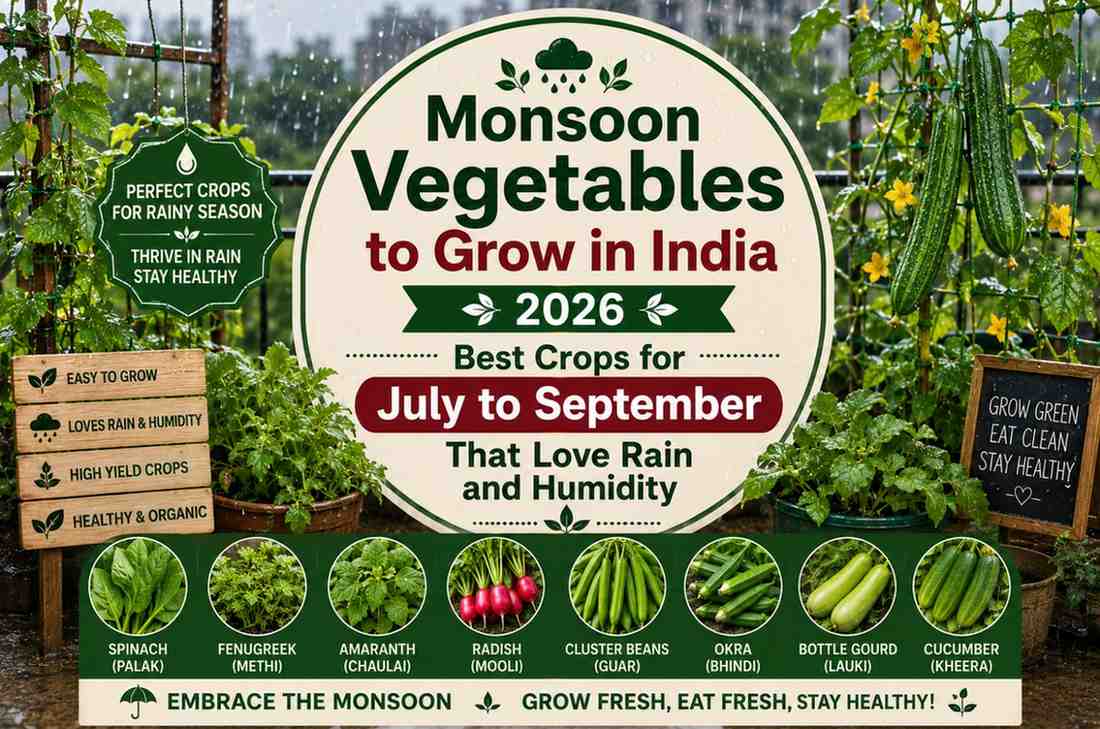
Most Indian gardeners put down their trowels when the monsoon arrives. They assume July to September is a dead season for vegetable gardening — too much rain, too much humidity, too many pests. This is one of the biggest gardening myths in India. The truth is that monsoon vegetables to grow in India 2026 are some of the most productive, fastest-growing, and most rewarding crops of the entire year.
The key is choosing correctly. Not every vegetable loves rain — but many absolutely thrive in it. The right monsoon vegetables to grow in India 2026 germinate faster in warm, moist soil, establish quickly without the need for constant watering, and produce abundantly through the wet season. Some of India’s most nutritious and beloved vegetables belong to the monsoon season.
This guide gives you the complete picture — which vegetables to grow, how to care for them in wet conditions, how to protect them from the unique challenges of the monsoon, and how to make July to September one of the most productive periods in your kitchen garden.
Why the Monsoon Is Actually a Great Time to Grow Vegetables in India
Before listing the best monsoon vegetables to grow in India 2026, it helps to understand what makes this season different — and why it is far more gardener-friendly than most people think.
Natural Irrigation
The monsoon provides consistent natural watering — reducing your daily gardening workload significantly. Crops that need regular moisture (leafy greens, gourds, and climbing beans) grow effortlessly without you lifting a watering can for days at a time.
Warm, Moist Soil = Fast Germination
Soil temperatures of 28–35°C combined with consistent moisture create near-ideal germination conditions. Seeds sown in July often germinate in just 3–4 days — faster than any other season.
Lush, Fast Growth
The combination of warmth, moisture, and longer daylight hours in early monsoon makes monsoon vegetables to grow in India 2026 grow at remarkable speed. A ridge gourd vine planted in late June can reach the top of a 6-foot trellis within 3 weeks.
Replenished Soil Biology
Rain reactivates soil microbes and earthworms that go dormant in dry summer heat. This biological activity makes nutrients more available to plant roots — one reason monsoon vegetables to grow in India 2026 often outperform crops grown in other seasons.
The Best Monsoon Vegetables to Grow in India 2026
Here are the top vegetables that belong in every monsoon vegetables to grow in India 2026 planting plan. Each has been chosen for its love of rain, humidity tolerance, and strong performance in Indian monsoon conditions.
1. Ridge Gourd (Turai) — The Monsoon Champion
Ridge gourd is the quintessential monsoon vegetable to grow in India 2026. It grows vigorously in warm, wet conditions, produces prolifically, and is one of the most popular vegetables across India during the monsoon months.
Why it thrives in monsoon:
- Loves warm, humid conditions
- Vining habit makes it easy to train upward, away from waterlogged soil
- Fast-growing — reaches harvest in 45–55 days from sowing
Growing guide:
- Sow: Late June to mid-July
- Support: Strong trellis or bamboo frame — vines can reach 10 feet
- Pot/bed size: 14-inch pot or raised bed; large containers essential
- Care: Ridge gourd handles rain well but ensure containers drain freely. Harvest pods when 6–8 inches long — they become fibrous and tough if left too long.
Monsoon tip: In very heavy rain, hand-pollinate flowers early in the morning before rain washes away pollen. This dramatically improves fruit set.
2. Bitter Gourd (Karela) — Nutritious and Rain-Loving
Bitter gourd is among the most popular monsoon vegetables to grow in India 2026. It loves warm, humid weather and produces its best yields during the July to September window.
Growing guide:
- Sow: June to July
- Days to harvest: 55–65 days
- Support: Sturdy trellis essential — vines are heavy when laden with fruit
- Varieties: Pusa Do Mausami (a favourite for Indian monsoon growing), Arka Harit
Monsoon tip: Nick or sand the hard seed coat before sowing for faster germination. In monsoon conditions, bitter gourd seeds often germinate in just 3–5 days when pre-treated.
3. Bottle Gourd (Lauki) — High Yield Through the Rains
Bottle gourd is one of the most productive monsoon vegetables to grow in India 2026. A single well-grown plant can produce 15–25 gourds through the monsoon season — more than enough for a family and neighbours.
Growing guide:
- Sow: June to July
- Days to harvest: 55–65 days from sowing
- Support: Very strong trellis or roof structure — vines and fruit are both heavy
- Care: Grow two plants for reliable cross-pollination. Harvest gourds when still light green and firm; overripe gourds become seedy and bitter.
Monsoon tip: Bottle gourd vines can sprawl over rooftops magnificently during the monsoon — a traditional sight in Indian homes. If you have a tiled or flat roof, this is an excellent way to use the space.
4. Snake Gourd (Chichinda) — Long, Striking, and Productive
Snake gourd is a beautifully productive monsoon vegetable to grow in India 2026. Its long, slender fruits hang vertically from trellises, sometimes reaching 90 cm in length, and it thrives in exactly the warm, wet conditions the monsoon brings.
Growing guide:
- Sow: June to July
- Days to harvest: 50–60 days
- Harvest: Pick when fruits are pale green and before they mature to orange — at this stage they are most tender and flavourful
5. Ivy Gourd (Tindora / Kundru) — The Perennial Monsoon Performer
Ivy gourd is one of the most underrated monsoon vegetables to grow in India 2026. It is a perennial creeper that comes alive during the monsoon, producing small, crisp fruits prolifically through July to September.
Why it is special:
- Perennial — plant once, harvest every monsoon for years
- Extremely low maintenance once established
- Thrives in high humidity that would damage other crops
- Propagates easily from stem cuttings — no seeds needed
Growing guide:
- Plant stem cuttings in June; roots establish during early monsoon
- Train over fences, walls, or trellises
- Harvest fruits when bright green and 3–4 cm long; red fruits are overripe
6. Spinach (Palak) — The Leafy Green That Loves Monsoon Shade
Spinach is primarily a winter crop in India, but it is also one of the most reliable monsoon vegetables to grow in India 2026 when grown in partial shade. The monsoon’s reduced direct sunlight actually prevents bolting — one of the main challenges with summer spinach.
Growing guide:
- Sow: July to August (in containers or raised beds with good drainage)
- Days to harvest: 25–30 days
- Location: Partial shade preferred during monsoon — the reduced sun extends the harvest window significantly
- Key challenge: Drainage — waterlogged spinach roots rot quickly. Grow in raised beds or elevated containers.
Monsoon tip: Grow spinach in containers that can be moved under a covered area during extremely heavy downpours. A few hours of protection during violent rain prevents soil compaction and fungal issues.
7. Amaranth (Chaulai) — The Most Monsoon-Proof Leafy Green
If any leafy green was designed for Indian monsoon conditions, it is amaranth. It is unquestionably one of the most resilient monsoon vegetables to grow in India 2026 — tolerating heavy rain, high humidity, warm temperatures, and even brief waterlogging that would kill most other crops.
Growing guide:
- Sow: June to August — the entire monsoon window
- Days to harvest: 25–35 days; harvest repeatedly by cutting young growing tips
- Varieties: Red and green amaranth both perform excellently in monsoon
- Care: Almost zero care needed — scatter seeds, water once after sowing, and let the monsoon do the rest
Amaranth is the number one recommendation for gardening beginners exploring monsoon vegetables to grow in India 2026 — it is nearly impossible to fail with.
8. Colocasia / Taro (Arbi) — A True Monsoon Root Vegetable
Colocasia is one of the most authentic monsoon vegetables to grow in India 2026 — it has been grown during the Indian rainy season for thousands of years, and for good reason. It loves standing moisture, warm temperatures, and the long monsoon growing season.
Growing guide:
- Plant: Corms (small tuber pieces) in June
- Days to harvest: 120–150 days — a long-season crop harvested in October–November
- Location: Can tolerate partial shade and even mildly waterlogged soil
- Harvest: Both leaves (used as a vegetable in many Indian cuisines) and corms are edible
Monsoon tip: Colocasia leaves are ready to eat within 6–8 weeks of planting — long before the corms. Do not waste this early harvest.
9. Cluster Beans (Guar) — Monsoon Beans That Fix Nitrogen
Cluster beans are one of the most productive and soil-friendly monsoon vegetables to grow in India 2026. As a legume, they fix atmospheric nitrogen into the soil — improving fertility for subsequent crops planted in the same bed after the monsoon.
Growing guide:
- Sow: June to July
- Days to harvest: 45–55 days (tender pods)
- Care: Minimal — cluster beans are drought-tolerant and rain-tolerant; one of the lowest-maintenance monsoon crops
- Harvest: Pick pods when young and tender, every 2–3 days once production begins
10. Pointed Gourd (Parwal) — East India’s Monsoon Favourite
Pointed gourd is a perennial climber and one of the most beloved monsoon vegetables to grow in India 2026, especially in West Bengal, Odisha, Bihar, and eastern Uttar Pradesh. It thrives in the warm, humid monsoon conditions of eastern India.
Growing guide:
- Propagate: From stem cuttings or root cuttings — seeds have very low germination
- Season: Monsoon is the peak production period
- Support: Train over fence or trellis
- Harvest: Pick fruits when 5–8 cm long and bright green
The Biggest Monsoon Gardening Challenges — And How to Fix Them
Growing monsoon vegetables to grow in India 2026 comes with unique challenges that do not exist in other seasons. Here is how to handle each one:
Challenge 1 — Fungal Disease Explosion
High humidity and poor air circulation create ideal conditions for fungal diseases — powdery mildew, downy mildew, damping off, and leaf blight are all common during monsoon.
Solutions:
- Space plants generously — do not overcrowd
- Remove diseased leaves immediately
- Spray copper-based fungicide (available at nurseries) or baking soda solution (1 tsp per litre water) weekly as prevention
- Ensure containers have excellent drainage — standing water at roots accelerates fungal problems dramatically
- Spray neem oil solution every 10 days throughout the monsoon
Challenge 2 — Waterlogging
Even rain-loving monsoon vegetables to grow in India 2026 cannot tolerate their roots sitting in standing water for extended periods.
Solutions:
- Use raised beds or elevated containers — the single best solution
- Ensure all pots and grow bags have multiple drainage holes
- Elevate containers on bricks or pot feet so drainage holes are not blocked
- Add perlite or coarse sand to soil mix to improve drainage
Challenge 3 — Pest Pressure — Slugs, Snails, and Caterpillars
Slugs, snails, and various caterpillars proliferate dramatically during the monsoon and can devastate soft-leaved monsoon vegetables to grow in India 2026 overnight.
Solutions:
- Place copper tape around container rims — slugs and snails dislike crossing copper
- Sprinkle diatomaceous earth around plant bases (reapply after rain)
- Hand-pick caterpillars in the evening when they are most active
- Spray Bt (Bacillus thuringiensis) — a safe biological pesticide effective against caterpillars
- Check plants every evening during heavy pest pressure periods
Challenge 4 — Pollination Problems
Bees and other pollinators are less active during heavy rain. This reduces fruit set in gourds, beans, and other flowering monsoon vegetables to grow in India 2026.
Solutions:
- Hand-pollinate flowers early in the morning before rain starts
- Use a small paintbrush to transfer pollen from male to female flowers
- For gourds: pick a fully open male flower, remove petals, and dab directly onto the centre of a female flower (female flowers have a tiny fruit at their base)
Monsoon Soil Care — Keeping Your Garden Healthy Through the Rains
Monsoon rain can compact soil, wash away nutrients, and compact container surfaces. Here is how to protect your monsoon vegetables to grow in India 2026 growing medium:
- Mulch generously — 3-inch layer of dry leaves, straw, or cocopeat prevents soil splash and compaction from heavy rain
- Top up compost — Rain leaches nutrients; add a fresh layer of vermicompost every 3–4 weeks during monsoon
- Avoid bare soil — always have plants or mulch covering the soil surface to prevent erosion and nutrient loss
- Refresh drainage layers — check that drainage holes have not become clogged with soil after heavy rain
Region-Wise Monsoon Vegetable Guide for India 2026
Different parts of India receive very different monsoon conditions. Here is a tailored guide to monsoon vegetables to grow in India 2026 by region:
| Region | Monsoon Character | Best Monsoon Vegetables |
|---|---|---|
| North India (Delhi, UP, Punjab, Bihar) | Hot, heavy July–August rain | Ridge Gourd, Bottle Gourd, Amaranth, Cluster Beans, Okra |
| South India (Tamil Nadu, Kerala, Karnataka) | Two monsoon periods (SW + NE) | Bitter Gourd, Snake Gourd, Ivy Gourd, Amaranth, Cowpea |
| West India (Maharashtra, Gujarat) | Heavy June–September rain | Bottle Gourd, Ridge Gourd, Cluster Beans, Colocasia |
| East India (West Bengal, Odisha, Assam, Bihar) | Very heavy rain, high humidity | Pointed Gourd, Colocasia, Amaranth, Bitter Gourd, Ivy Gourd |
| Hill Regions (Himachal, Uttarakhand, NE) | Heavy rain, cool temperatures | Beans, Spinach, Cabbage, Leafy Amaranth |
Quick-Reference Monsoon Planting and Harvest Chart
| Vegetable | Sow / Plant | Days to Harvest | Harvest Window |
|---|---|---|---|
| Ridge Gourd | Late June–July | 45–55 days | August–September |
| Bitter Gourd | June–July | 55–65 days | August–October |
| Bottle Gourd | June–July | 55–65 days | August–October |
| Snake Gourd | June–July | 50–60 days | August–September |
| Ivy Gourd | June (cuttings) | 60–70 days | August–October |
| Amaranth | June–August | 25–35 days | Ongoing through monsoon |
| Spinach | July–August | 25–30 days | August–September |
| Cluster Beans | June–July | 45–55 days | August–September |
| Colocasia | June (corms) | 120–150 days | October–November |
| Pointed Gourd | June (cuttings) | 60–70 days | August–October |
Show Image ALT text: monsoon vegetables to grow in India 2026 — bitter gourd, ridge gourd and amaranth harvested from Indian monsoon garden
Organic Fertilising During Monsoon
Rain leaches nutrients from soil faster than any other season. Regular feeding is essential for productive monsoon vegetables to grow in India 2026. Use these organic options:
- Vermicompost top dressing — apply a 1-inch layer around plants every 3 weeks; rain gently works it into the soil
- Jeevamrut — apply as soil drench every 15 days; reactivates soil microbes suppressed by waterlogging
- Liquid seaweed extract — spray on leaves (foliar feed) every 10 days for fast nutrient uptake; especially useful when heavy rain has washed root-zone nutrients away
- Banana peel liquid — apply weekly to flowering gourds and beans for potassium boost
Avoid dry granular fertilisers during heavy monsoon periods — they wash away before plants can absorb them. Liquid and top-dressing forms are most effective for monsoon vegetables to grow in India 2026.
Trusted Resources for Monsoon Vegetable Gardening in India
- National Horticulture Board India — Seasonal growing advice and kitchen garden programmes
- IARI New Delhi — Vegetable Science — Research on monsoon-suitable varieties for Indian conditions
- Ugaoo Blog — Monsoon Gardening — India-specific monsoon growing guides and tips
- Krishijagran — Indian agriculture seasonal news and home gardening advice
- Balcony Garden Web — Container and raised bed monsoon gardening techniques
FAQ — Monsoon Vegetables to Grow in India 2026
Q1. Can I grow vegetables during the monsoon on my apartment balcony? Absolutely. Many of the best monsoon vegetables to grow in India 2026 — including amaranth, spinach, ridge gourd, and cluster beans — grow brilliantly in containers on a covered or semi-covered balcony. Ensure containers drain freely and position plants where they receive some natural rain without being battered by heavy downpours.
Q2. Which is the easiest monsoon vegetable for beginners in India? Amaranth (chaulai) is the easiest by far. Scatter seeds in a container, water once, and the monsoon rains take care of the rest. It germinates in 3–5 days, grows vigorously through the wet season, and provides multiple harvests within 30 days.
Q3. How do I prevent fungal disease in my monsoon garden? Space plants well for good air circulation, avoid overhead watering (let the rain do it naturally), remove diseased leaves promptly, and spray diluted neem oil every 10 days as a preventive measure. Growing in raised beds or elevated containers where roots never sit in standing water is the single most effective structural prevention.
Q4. Do gourd plants need hand pollination during the monsoon? Yes — particularly during periods of very heavy or continuous rain when bees are inactive. Hand-pollinate flowers early in the morning before the daily rains begin. This is one of the most important care steps for productive gourd harvests from your monsoon vegetables to grow in India 2026 garden.
Q5. Is July too late to start growing monsoon vegetables in India? July is not too late for most monsoon vegetables to grow in India 2026. Amaranth, spinach, ridge gourd, and cluster beans can all be sown in July and will still produce a good harvest before the monsoon ends in September. Some crops like colocasia and pointed gourd are best started in June, but most fast-growing monsoon vegetables give excellent results even from a July sowing.
Conclusion
The monsoon is not a gardening obstacle — it is an opportunity. The best monsoon vegetables to grow in India 2026 use July to September’s warmth, moisture, and natural rainfall to grow faster, produce more abundantly, and thrive with less effort than almost any other season requires.
Stop putting your garden to sleep when the first rains arrive. Start your ridge gourds, bitter gourds, amaranth, and cluster beans in June or early July. Let the monsoon water them naturally. Hand-pollinate your gourd flowers on rain-free mornings. Protect against fungal disease with neem oil and good drainage. And harvest the most prolific, lush, nutritious vegetables of the entire gardening year.
The monsoon season is waiting — and so are your best-ever harvests. Plan your monsoon vegetables to grow in India 2026 this week, order your seeds and cuttings now, and transform the rainy season into the most productive three months your kitchen garden has ever seen.