 editer@organickheti.in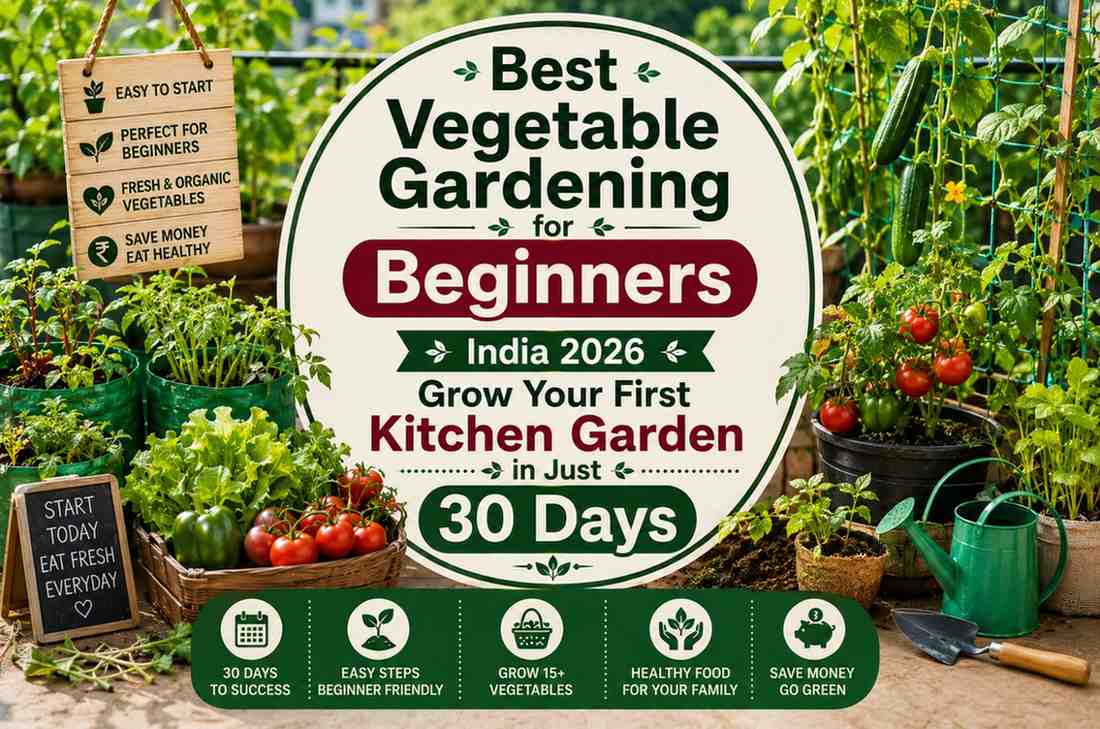
Introduction
If you have always wanted fresh tomatoes, spinach, or chillies right outside your kitchen window, this guide to vegetable gardening for beginners India 2026 is exactly what you need. You do not need a large farm, expensive tools, or years of experience. A sunny balcony, a few pots, and 30 focused days are enough to harvest your first homegrown vegetables.
India’s climate is one of the most garden-friendly in the world. With the right knowledge, almost anyone — from a flat in Mumbai to a house in Jaipur — can grow fresh food at home.
Why 2026 Is the Best Year to Start Vegetable Gardening in India
Interest in home gardening has exploded across India in the last few years. Seeds, soil mixes, and grow bags are now easily available online and in local nurseries. Prices have come down, information is freely available, and communities of home gardeners have grown on every social platform.
Vegetable gardening for beginners India 2026 is also more relevant than ever because of rising vegetable prices, concerns about pesticide use in store-bought produce, and a growing desire to eat fresh, clean food.
Starting this year means you benefit from:
- Better quality desi seed varieties available online
- Affordable cocopeat and compost widely accessible
- Grow bags replacing the need for heavy clay pots
- YouTube and community forums specific to Indian conditions
What You Need Before You Start — The Beginner’s Checklist
Before diving into vegetable gardening for beginners India 2026, gather these basics. You do not need to buy everything at once. Start small.
Containers and Space
- Grow bags (12-inch to 16-inch) are ideal for most vegetables
- Repurposed plastic crates, buckets, or old cooking pots work perfectly
- A balcony, terrace, or window ledge with 4–6 hours of direct sunlight is enough
Soil and Growing Medium
Never use plain garden soil in pots — it becomes hard and waterlogged. Instead, mix:
- 40% cocopeat
- 30% compost or vermicompost
- 30% garden soil or red soil
This mix drains well, holds moisture, and gives roots room to breathe. It is the foundation of successful vegetable gardening for beginners India 2026.
Seeds and Seedlings
For your first kitchen garden, start with easy, fast-growing vegetables:
- Spinach (Palak) — Ready in 25–30 days
- Fenugreek (Methi) — Ready in 20–25 days
- Radish (Mooli) — Ready in 25–30 days
- Green Chilli — Ready in 60–70 days
- Cherry Tomatoes — Ready in 50–60 days
Basic Tools
- A small hand trowel
- A watering can with a rose head (for gentle watering)
- A spray bottle for seedlings
- Neem oil (natural pest control)
The 30-Day Beginner Plan for Vegetable Gardening in India
This structured plan makes vegetable gardening for beginners India 2026 achievable and fun. Follow it step by step.
Week 1 — Setup and Sowing (Days 1–7)
Day 1–2: Choose your space. Identify the sunniest spot on your balcony or terrace. Measure how many pots or grow bags you can fit.
Day 3–4: Buy your supplies. Get grow bags, cocopeat, vermicompost, and seeds from a local nursery or online store.
Day 5: Prepare your soil mix. Combine cocopeat, compost, and garden soil in the ratio described above. Fill your grow bags, leaving 2 inches from the top.
Day 6–7: Sow your seeds. Sow spinach, methi, and radish seeds directly into pots. Press seeds lightly into the soil, cover with a thin layer of compost, and water gently.
Pro Tip: Soak seeds overnight in plain water before sowing. This speeds up germination by 2–3 days.
Week 2 — Germination and Care (Days 8–14)
Most seeds will germinate within 5–7 days. You will see tiny green shoots pushing through the soil — this is one of the most exciting moments in vegetable gardening for beginners India 2026.
During this week:
- Water gently every morning, avoiding overwatering
- Keep soil moist but never waterlogged
- If you are growing in summer, move pots to a spot with morning sun and afternoon shade
- Watch for any signs of fungal issues (white powder, yellowing) — spray diluted neem oil as a preventive measure
Week 3 — Thinning and First Feeding (Days 15–21)
Once seedlings are 2–3 inches tall, thin them out. Remove weaker seedlings so stronger ones have space to grow. For spinach and methi, leave 3–4 inches between plants.
Give your first feed of liquid fertiliser. Options include:
- Diluted jeevamrut (traditional Indian biofertiliser)
- Diluted vermicompost tea (soak vermicompost in water for 24 hours and strain)
- Commercially available seaweed extract
Feed once a week from this point onwards. Feeding is one of the most overlooked steps in vegetable gardening for beginners India 2026 and makes a big difference to yield.
Week 4 — Growth, Harvest Prep, and Next Steps (Days 22–30)
By the end of week 4:
- Your spinach and methi will be ready to harvest. Cut leaves from the outer ring, leaving the centre to regrow.
- Radishes will be pushing up from the soil — gently pull one to check size.
- Your chilli and tomato seedlings (if started in week 1) will be 4–6 inches tall.
Harvest your first greens and enjoy the reward of growing your own food.
Common Mistakes Beginners Make (And How to Fix Them)
Even the best guide on vegetable gardening for beginners India 2026 cannot guarantee success if you fall into these traps. Here are the most common ones:
Overwatering
This kills more plants than any pest or disease. Stick your finger 1 inch into the soil. If it feels moist, do not water. Only water when the top inch feels dry.
Using Plain Garden Soil
Garden soil compacts in pots, suffocates roots, and causes waterlogging. Always use the cocopeat-compost mix described above.
Not Enough Sunlight
Most vegetables need a minimum of 4–6 hours of direct sunlight. Leafy greens can manage with 3–4 hours, but fruiting vegetables like tomatoes and chillies need at least 6 hours. If your space does not get enough light, stick to leafy greens.
Ignoring Pests
Check the undersides of leaves every 2–3 days. Aphids, mealybugs, and whiteflies are common in Indian home gardens. Spray neem oil solution (5 ml neem oil + 1 ml dish soap in 1 litre water) weekly as a preventive measure.
Planting Too Many Varieties at Once
Beginners often buy 10 types of seeds and end up overwhelmed. Start with 3–4 easy vegetables. Master them, then expand.
Best Vegetables for Beginners in Different Indian Regions
India’s climate varies dramatically. Here is a quick guide to what grows best where for vegetable gardening for beginners India 2026:
| Region | Best Beginner Vegetables | Best Season to Start |
|---|---|---|
| North India (Delhi, UP, Punjab) | Spinach, Radish, Peas, Carrot | October–February |
| South India (Tamil Nadu, Kerala, Karnataka) | Amaranth, Okra, Curry Leaf, Tomato | June–August, November–January |
| West India (Maharashtra, Gujarat, Rajasthan) | Methi, Coriander, Chilli, Brinjal | October–February |
| East India (Bengal, Odisha, Assam) | Spinach, Pointed Gourd, Taro, Green Chilli | September–November |
| Hill Regions (Himachal, Uttarakhand, NE) | Peas, Beans, Cabbage, Lettuce | March–June |
Understanding your regional climate is critical in vegetable gardening for beginners India 2026.
Show Image ALT text: vegetable gardening for beginners India 2026 — harvesting spinach from grow bags on terrace
Seasonal Calendar for Vegetable Gardening in India
Timing is everything. Planting the right vegetable in the right season is the single biggest factor in your success with vegetable gardening for beginners India 2026.
Summer (March to June)
- Okra (Bhindi), Bitter Gourd (Karela), Ridge Gourd, Amaranth, Cucumber, Chilli
Monsoon (July to September)
- Spinach, Methi, Taro, Pointed Gourd, Colocasia
Winter (October to February)
- Peas, Carrot, Radish, Cabbage, Cauliflower, Tomato, Coriander, Fenugreek
The winter season is by far the easiest and most productive season for vegetable gardening for beginners India 2026. If you are just starting, aim to begin in October or November.
How to Water Correctly — The Most Important Skill
Watering correctly is the single most important skill in vegetable gardening for beginners India 2026. Here is a simple rule:
- Morning watering is best — it lets leaves dry during the day, preventing fungal disease
- Deep, infrequent watering is better than shallow daily watering for most vegetables
- Leafy greens need water every day in summer, every 2 days in winter
- Fruiting vegetables (tomato, chilli, brinjal) prefer slightly drier conditions between waterings
Use a watering can with a rose head to spread water gently over the soil surface. Avoid wetting the leaves excessively.
Organic Fertilisers Available Easily in India
Feeding your plants does not have to be expensive. These fertilisers are accessible across India and work brilliantly in vegetable gardening for beginners India 2026:
- Vermicompost — Available at most nurseries, excellent all-purpose fertiliser
- Cow dung compost — Widely available, great for soil structure
- Mustard cake (Sarson ki Khali) — Soak in water for 5 days, dilute 1:10, and use as liquid feed
- Banana peel liquid — Soak banana peels in water for 3 days, strain, and use for potassium
- Jeevamrut — Traditional biofertiliser made from cow dung, cow urine, and jaggery
Avoid synthetic fertilisers in kitchen gardens. The goal is clean, safe food.
Growing Without a Garden — Vertical and Container Options
Do not let a lack of outdoor space stop you from vegetable gardening for beginners India 2026. These space-saving options work beautifully:
- Vertical pocket planters — Hang on walls or railings, perfect for leafy greens and herbs
- Hanging baskets — Great for cherry tomatoes and strawberries
- Window boxes — Ideal for coriander, methi, and spring onions
- Stacked crates — DIY vertical garden using old plastic crates
- Railing planters — Clip-on planters for apartment balconies
Even a 4×2 foot balcony can produce enough greens for weekly salads when managed well.
Useful Resources for Indian Home Gardeners
Here are five trusted resources to support your journey in vegetable gardening for beginners India 2026:
- National Horticulture Board India — Official government resource for horticulture guidance
- IARI (Indian Agricultural Research Institute) — Research-backed growing guides
- Ugaoo Blog — India-specific gardening tips and seed guides
- Balcony Garden Web — Container gardening techniques applicable to Indian conditions
- Kerala Agricultural University — Region-specific vegetable growing advice
FAQ — Vegetable Gardening for Beginners India 2026
Q1. What is the easiest vegetable to grow at home in India for a beginner? Spinach (palak) and fenugreek (methi) are the easiest. Both germinate within 5–7 days, grow in small pots, and can be harvested in under 30 days.
Q2. How much sunlight does a kitchen garden need in India? Most vegetables need 4–6 hours of direct sunlight. Leafy greens can manage with 3–4 hours. South or east-facing balconies usually get enough light.
Q3. Can I do vegetable gardening in summer in India? Yes. Okra, chilli, cucumber, and bitter gourd grow well in Indian summers. Use mulching to retain soil moisture and water in the early morning.
Q4. How often should I fertilise my kitchen garden? Once a week with a diluted liquid fertiliser (vermicompost tea, jeevamrut, or mustard cake water) is ideal during the active growing season.
Q5. Is it safe to use tap water for watering vegetables in India? Yes, tap water is generally safe. If your water is heavily chlorinated, let it sit in a bucket for 30 minutes before using — the chlorine will dissipate naturally.
Conclusion
Vegetable gardening for beginners India 2026 has never been more accessible. You do not need land, expensive equipment, or expertise. You need a sunny spot, the right soil mix, a few grow bags, and the willingness to start.
Begin with spinach and methi. Master the basics of watering, feeding, and pest control. Within 30 days, you will be harvesting your first homegrown vegetables — and wondering why you waited so long.
Ready to start? Pick three vegetables from this guide, order your seeds today, and plant your first kitchen garden this week. Share your progress in the comments below or tag us on social media. The best time to start was last year — the second best time is right now.