 editer@organickheti.in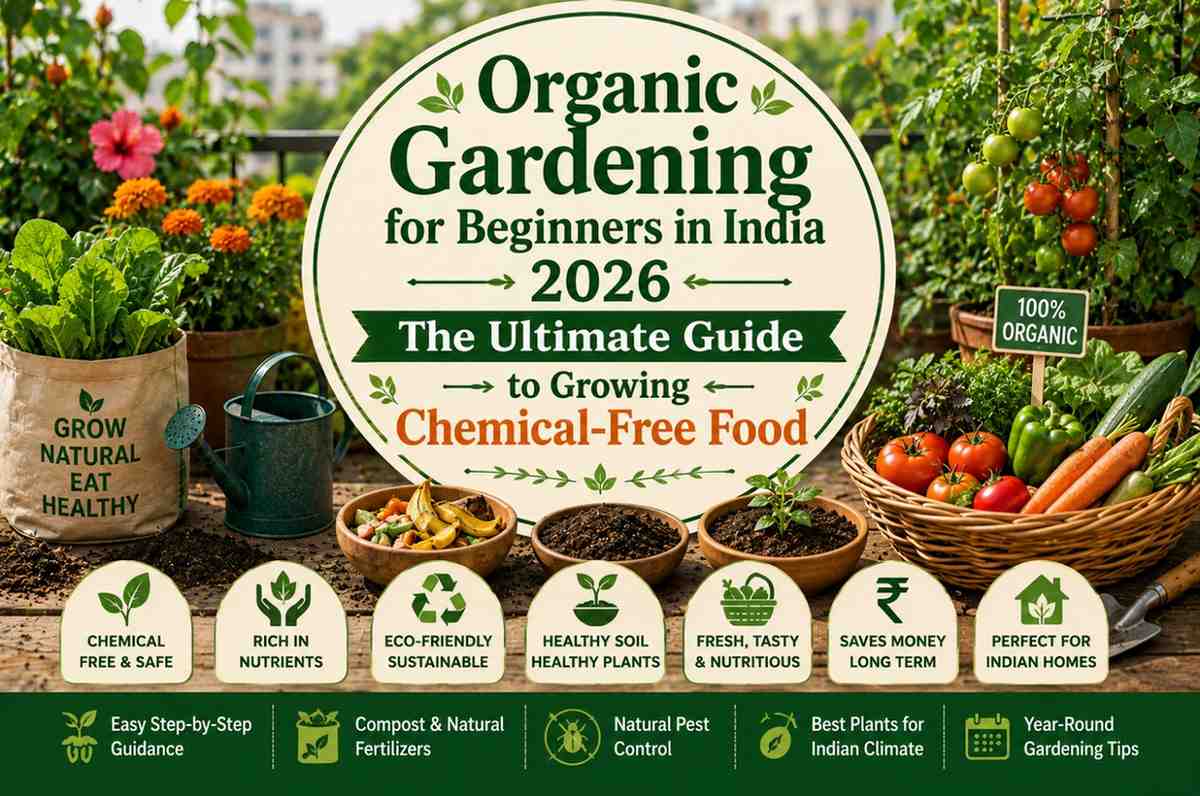
Are you tired of buying vegetables that taste like chemicals? Do you want to grow your own fresh, safe, and nutritious food at home? Then organic gardening for beginners in India 2026 is exactly where you need to start.
India has one of the richest farming traditions in the world. Yet today, most of the vegetables you buy in markets are loaded with pesticides and synthetic fertilizers. The good news? You don’t need a farm or even a big garden to change that. A sunny balcony, a few pots, or a small backyard bed are all you need.
This complete guide will walk you through everything—from choosing the right soil to growing your first crop—the completely natural way.
Why Organic Gardening for Beginners India 2026 Is the Right Choice
Organic gardening is not just a trend. It is a return to the way our grandparents grew food—without chemicals, without toxins, and in harmony with nature.
Here’s why it matters more than ever in 2026:
- Food safety — Pesticide residues in Indian vegetables have crossed alarming levels according to multiple FSSAI reports.
- Health benefits — Organically grown food is richer in antioxidants, vitamins, and minerals.
- Cost savings — Growing your own food significantly reduces your monthly vegetable bill.
- Environment — Organic methods improve soil health, protect pollinators, and reduce water pollution.
- Mental wellness — Gardening reduces stress, improves mood, and keeps you physically active.
Whether you live in Delhi, Mumbai, Bengaluru, Chennai, or a small town in Rajasthan—organic gardening for beginners in India 2026 is accessible, affordable, and deeply rewarding.
Understanding the Indian Climate: Plan According to Your Zone
India is not one climate—it is many. Before you start your organic garden, understand your growing zone.
India’s Broad Climate Zones for Gardeners:
| Zone | States/Regions | Best Growing Season |
|---|---|---|
| Tropical Humid | Kerala, coastal Karnataka, Goa | Year-round |
| Semi-Arid | Rajasthan, Gujarat, Maharashtra | Oct–Feb |
| Subtropical | Punjab, UP, Bihar, Haryana | Feb–May, Sept–Nov |
| Hilly/Temperate | Himachal, Uttarakhand, NE States | April–Sept |
| Semi-Humid | West Bengal, Odisha, Chhattisgarh | Oct–March |
Knowing your zone helps you pick the right plants at the right time. Organic gardening for beginners in India in 2026 starts with this simple but essential step.
Choosing the Right Space: Balcony, Bed, or Pot?
You don’t need land to garden organically. Let’s look at three popular setups:
Balcony / Terrace Gardening
Perfect for urban dwellers in flats. Use lightweight containers, grow bags, and vertical planters. Balconies in cities like Mumbai or Bengaluru get 4–6 hours of sunlight — enough for most vegetables and herbs.
Best crops for balconies: tomatoes, chilies, coriander, mint, methi, spinach, lettuce, beans, and brinjal.
Raised-Bed Gardening
If you have a small garden, terrace, or backyard, raised beds are ideal. They drain well, warm up quickly, and are easy to fill with organic soil mix.
Best size to start: 4 feet × 8 feet — easy to reach across without stepping in.
Pot / Container Gardening
Grow bags and plastic/clay pots work beautifully. They are low cost, easy to move, and perfect for apartment dwellers.
Recommended sizes:
- Herbs: 6–8 inch pots
- Leafy greens: 10–12-inch pots
- Tomatoes, brinjal: 12–16 inch grow bags
- Root vegetables (radish, carrot): deep containers, 12+ inches deep
The Foundation: Organic Soil Mix for Indian Gardens
The most important element in organic gardening for beginners in India in 2026 is the soil. Healthy soil grows healthy plants — and healthy plants need fewer chemicals.
The Perfect Organic Soil Mix (DIY):
Mix these in equal proportions:
- Garden soil or red soil — base structure
- Compost or vermicompost — nutrients and microbial life
- Cocopeat — moisture retention and aeration
- River sand or perlite — drainage
Ratio: 40% soil + 30% compost + 20% cocopeat + 10% sand
Always test your mix by squeezing a handful: it should hold its shape briefly and then crumble apart easily.
Cocopeat is made from coconut husk and is widely and cheaply available across India—especially in South India. It is completely natural and biodegradable.
What to Grow: Best Vegetables for Organic Beginners in India
Choosing the right crops makes all the difference when starting organic gardening for beginners in India in 2026.
Easy Crops for Total Beginners:
Leafy Vegetables (fastest and easiest):
- Spinach (Palak) — ready in 25–30 days
- Methi (fenugreek)—ready in 20–25 days
- Coriander (Dhania) — ready in 20–30 days
- Amaranth (Chaulai) — ready in 30–35 days
Fruiting Vegetables (medium effort):
- Tomatoes — 60–80 days
- Chillies — 70–90 days
- Brinjal (Baingan) — 70–85 days
- Ladyfinger (Bhindi) — 50–60 days
Root Vegetables:
- Radish (Mooli) — 25–35 days
- Beetroot — 55–70 days
- Carrot — 70–80 days
Herbs (grow once, use forever):
- Mint (Pudina) — perennial
- Tulsi — perennial, low maintenance
- Lemongrass — perennial, pest-repelling
- Curry leaves (Kadi Patta) — perennial
Organic Watering Techniques for Indian Gardens
Water is precious in India — especially in water-scarce states like Maharashtra, Rajasthan, and Tamil Nadu. Organic gardening is naturally water-efficient when done right.
Smart Watering Rules:
- Water in the morning — reduces evaporation and fungal disease risk
- Water at the base — avoid wetting leaves (causes fungal problems in humid regions)
- Check moisture before watering — stick your finger 2 inches into the soil; water only if dry
- Use drip or ollas—clay pot irrigation (ollas) is an ancient Indian technique that saves 70% water
- Mulch your soil—a 2–3 inch layer of mulch cuts water loss dramatically
Natural Fertilizing Methods for Beginners
Chemical fertilizers may seem convenient, but they destroy the living ecosystem in your soil. Organic fertilizers feed both the plant AND the soil.
Top Organic Fertilizers for Indian Beginners:
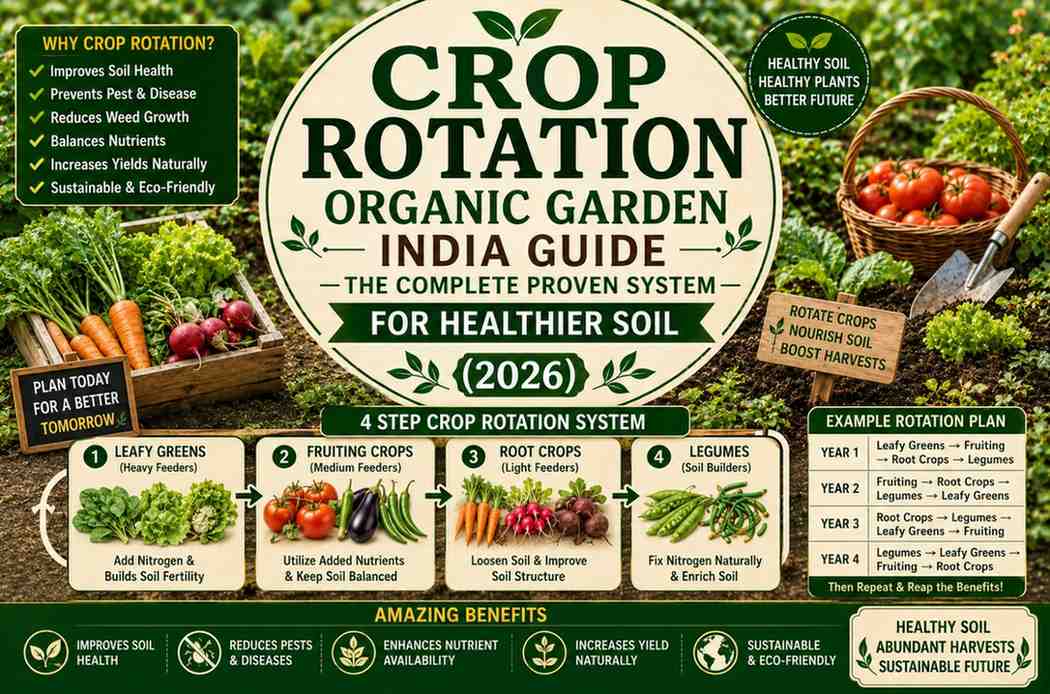
1. Compost Kitchen waste (vegetable peels, fruit scraps, tea leaves) + dry carbon material (dry leaves, cardboard) = rich black compost in 30–45 days.
2. Vermicompost: Earthworm castings are one of the most powerful organic fertilizers available. Rich in NPK, beneficial microbes, and plant growth hormones.
3. Cow Dung Manure (Gobar Khaad) Widely available across India. Well-composted cow dung enriches soil texture and fertility naturally.
4. Jeevamrut An ancient Indian biofertilizer made from cow dung, cow urine, jaggery, besan, and soil. Activates soil microorganisms and dramatically boosts plant growth.
5. Liquid Fertilizers (DIY) Banana peel water, rice water, onion skin tea, and buttermilk dilution are all powerful, free, and easy to make.
IMAGE SUGGESTION 1:
Placement: After the “What to Grow” section Description: A colourful Indian balcony garden showing pots of tomatoes, chillies, and leafy greens with morning sunlight ALT Text: “organic gardening for beginners India 2026—balcony vegetable garden with pots”
Natural Pest Control Without Chemicals
Pests are every gardener’s challenge. But in organic gardening for beginners in India 2026, we fight pests with nature—not poison.
Effective Natural Pest Remedies:
Neem Oil Spray Mix 5 ml cold-pressed neem oil + 1 ml liquid soap + 1 liter water. Spray weekly on leaves (top and bottom). Controls aphids, whiteflies, mealybugs, and fungal diseases.
Garlic-Chilli Spray Blend 10 garlic cloves + 5 green chilies + 1 liter water. Strain and spray. Powerful repellent for most sucking and chewing insects.
Companion Planting: Grow pest-repelling plants alongside vegetables:
- Marigolds repel nematodes and aphids
- Tulsi repels mosquitoes and whiteflies
- Lemongrass repels most insects
Neem Cake Mix neem cake into soil before planting. Kills soil-borne pests, nematodes, and fungal pathogens.
Organic Mulching: Protecting and Feeding Your Soil
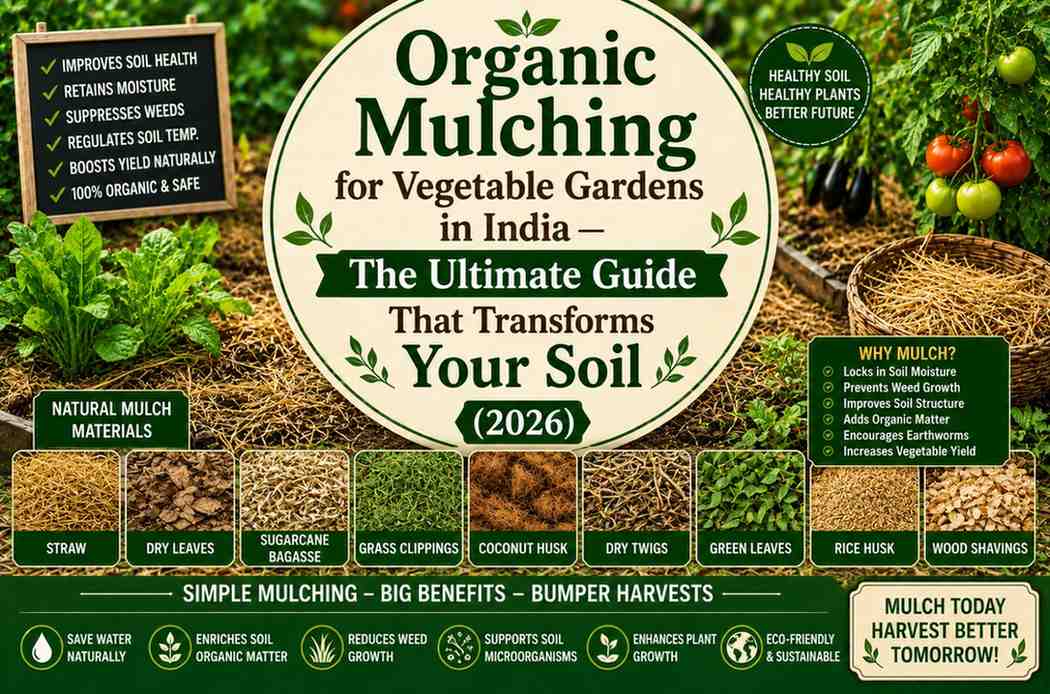
Mulching is one of the most underrated yet powerful techniques in organic gardening for beginners in India in 2026.
A 2–3 inch layer of organic mulch placed on the soil surface.
- Retains moisture (reduces watering by 40–50%)
- Suppresses weeds naturally
- Regulates soil temperature (vital in Indian summer heat)
- Slowly decomposes and feeds the soil
Best organic mulching materials in India:
- Dry leaves
- Straw or paddy husk
- Coconut coir / cocopeat
- Newspaper sheets (wet first)
- Dried grass clippings
Seasonal Planting Calendar for India
| Season | Months | What to Plant |
|---|---|---|
| Rabi (Winter) | Oct–Feb | Spinach, methi, peas, carrots, radish, tomatoes |
| Kharif (Summer-Monsoon) | June–Sept | Beans, brinjal, bhindi, cucumber, pumpkin |
| Spring | February–April | Chillies, tomatoes, herbs, lettuce |
Following the seasonal calendar is crucial in organic gardening for beginners in India in 2026. Planting in the wrong season weakens plants and increases pest pressure.
IMAGE SUGGESTION 2:
Placement: After the Seasonal Calendar Description: Indian woman gardening with raised beds showing seasonal vegetables in a home garden. ALT Text: “organic gardening for beginners India 2026—raised bed seasonal vegetable garden”
Common Mistakes Beginners Make (And How to Avoid Them)
Even the most enthusiastic new gardeners make these mistakes. Here’s how to sidestep them:
Overwatering — The #1 killer of potted plants. Always check soil before watering.
Using unripe compost—fresh organic waste can burn roots. Always compost fully before use.
Wrong pot size—small pots mean stressed plants and poor harvest. Match pot size to plant.
No sunlight planning—Observe your balcony’s sunlight before choosing crops.
Planting in the wrong season — Follow the seasonal calendar strictly, especially for beginners.
Ignoring soil health — Add compost or vermicompost to your soil every 6–8 weeks.
Authority External Resources
- National Centre of Organic and Natural Farming (NCONF) — India’s official government body for organic farming guidelines and standards.
- ICAR — Indian Council of Agricultural Research — Research-backed guides on organic methods, soil health, and pest management.
- Krishi Jagran — Organic Farming Section — India’s largest agricultural media platform with practical guides in Hindi and English.
- The Organic Farming Research Foundation—Global science-backed resource with research applicable to Indian conditions.
- FAO — Organic Agriculture Portal — UN Food and Agriculture Organization’s comprehensive organic agriculture guide.
FAQs: Organic Gardening for Beginners India 2026
Q1. Can I do organic gardening in a small apartment in India? Absolutely! Even a single sunny windowsill or small balcony is enough to grow herbs like coriander, mint, and methi organically. Start small with 2–3 pots and expand as your confidence grows.
Q2. How much does it cost to start an organic garden in India? You can start with as little as ₹500–₹1,500. Basic costs include grow bags (₹10–30 each), seeds (₹20–50 per packet), and cocopeat (₹80–120 per block). Compost can be made free from kitchen waste.
Q3. Which organic fertilizer is best for vegetables in India? Vermicompost is considered the gold standard for home vegetable gardens. It is balanced and slow-release and improves soil structure. Jeevamrut is excellent for an additional microorganism boost.
Q4. How do I keep pests away without using chemical pesticides? Neem oil spray is the most effective and widely available organic pesticide in India. Combined with companion planting (marigolds and tulsi) and regular plant inspection, it controls most common pests without chemicals.
Q5. When is the best time to start an organic garden in India? October to February (Rabi season) is ideal for most beginners across India. The cool weather makes it easier to grow leafy greens, herbs, and root vegetables with minimal pest pressure.
Conclusion
Organic gardening for beginners India 2026 is not complicated, expensive, or only for people with large farms. It starts with one pot, one seed, and one decision to grow your food naturally.
The food you grow yourself — even if it’s just a pot of tomatoes on your balcony — is the safest, freshest, and most nutritious food you will ever eat. And every plant you grow without chemicals is a small act of resistance against a food system that prioritizes profit over health.
Start this weekend. Pick up some seeds, fill a pot with organic soil mix, water it gently, and watch life grow. Your chemical-free garden is waiting.