 editer@organickheti.in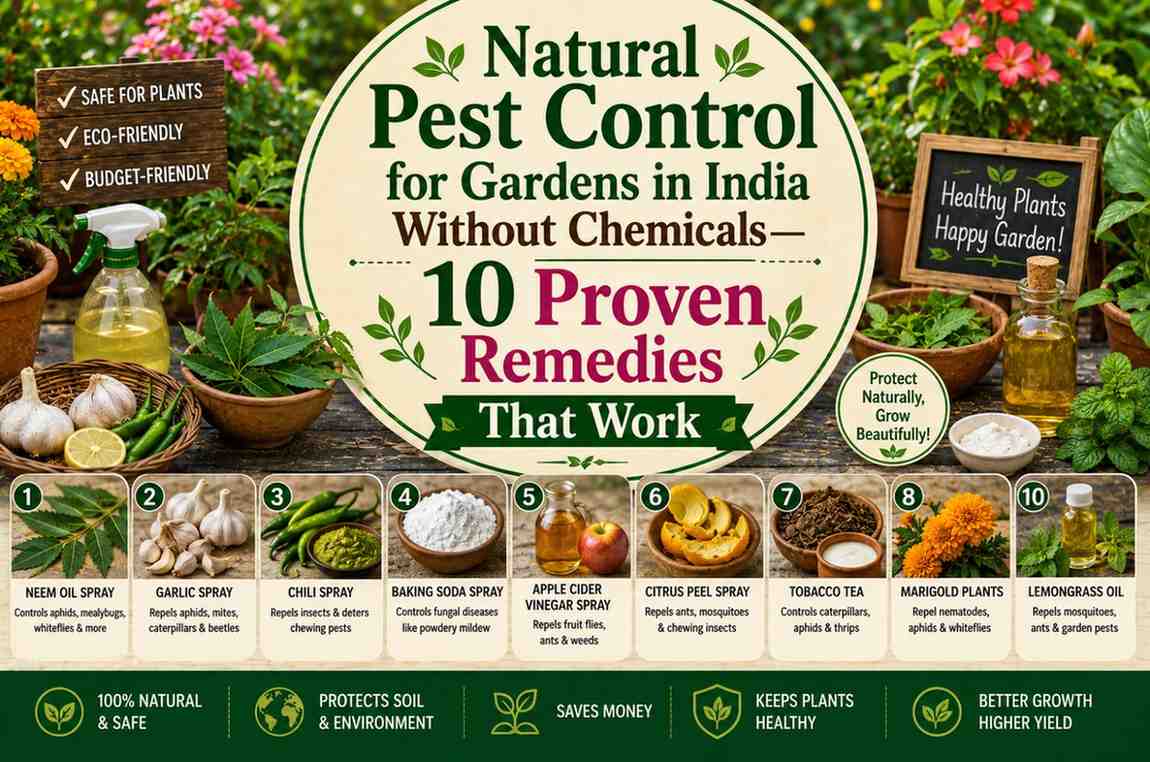
You walk out to your garden on a sunny morning, ready to tend your tomatoes—and then you see it. Leaves are riddled with holes, white cottony patches are on stems, and plants are yellowing and wilting.
Pests have arrived. And your first instinct might be to reach for a chemical pesticide.
But here is the truth: chemical pesticides kill pests — and then kill the beneficial insects, earthworms, and soil microbes that your garden desperately needs. They contaminate your food, your soil, and your groundwater.
Natural pest control for gardens in India without chemicals is not just the safer option—it is the smarter one. India’s rich tradition of natural farming gives us dozens of powerful, proven remedies that protect plants without poisoning anything else.
Let’s explore the 10 best natural pest control methods for Indian gardens.
Why Chemical Pesticides Are Hurting Indian Gardens
Before we dive into natural pest control for gardens in India without chemicals, let’s understand the real cost of chemicals.
- Kills beneficial insects—bees, ladybirds, lacewings, and parasitic wasps that naturally control pests
- Destroys soil life—earthworms, mycorrhizal fungi, and beneficial bacteria die from systemic pesticides
- Creates pesticide resistance — pests evolve rapidly; you end up needing stronger chemicals every year
- Contaminates food—residues remain on and inside vegetables even after washing
- Harms human health—linked to respiratory issues, hormonal disruption, and, in India, numerous pesticide poisoning deaths annually among farmers
Natural pest control for gardens in India without chemicals builds a resilient garden ecosystem where pests never gain the upper hand.
Understanding Common Garden Pests in India
Before choosing a remedy, identify what you’re dealing with:
| Pest | What You’ll See | Plants Attacked |
|---|---|---|
| Aphids | Tiny green/black clusters on new shoots | Tomatoes, chillies, beans |
| Whiteflies | A white cloud when plant is shaken | Tomatoes, brinjal, cucumbers |
| Mealybugs | White cottony masses on stems | Chillies, citrus, ornamentals |
| Caterpillars | Ragged holes in leaves | Cabbage, cauliflower, spinach |
| Red spider mites | Fine webbing under leaves | Brinjal, cucumbers, beans |
| Leaf miners | Winding lines inside leaves | Tomatoes, spinach |
| Scale insects | Brown bumps on stems | Citrus, curry leaf, mango |
| Root-knot nematodes | Swollen roots, wilting | Almost all vegetables |
| Thrips | Silver streaks on leaves | Chillies, onions, cucumbers |
| Fungus gnats | Tiny flies around soil | Most potted plants |
Now let’s explore the 10 best methods for natural pest control for gardens in India without chemicals.
Remedy 1: Neem Oil Spray — The Most Powerful Organic Pesticide
Neem oil is derived from the seeds of the neem tree (Azadirachta indica)—India’s own miracle tree, used for thousands of years in traditional medicine and agriculture.
The key active compound is azadirachtin, which:
- Disrupts the hormonal system of insects, preventing them from feeding and reproducing
- Works against over 200 species of insects
- Is completely safe for humans, birds, earthworms, and beneficial insects when used correctly
- Also controls many fungal diseases (powdery mildew, leaf spot, damping off)
Recipe:
- 5ml cold-pressed neem oil
- 2ml liquid soap or dish soap (as emulsifier)
- 1 litre warm water
- Shake well before each use
How to use:
- Spray on ALL leaf surfaces — top AND bottom
- Apply in the early morning or evening (not in harsh midday sun)
- Spray weekly as prevention; every 3–4 days for active infestations
- Reapply after rain
Controls: Aphids, whiteflies, mealybugs, spider mites, thrips, leaf miners, scale insects, and many fungal diseases.
Neem oil is the cornerstone of natural pest control for gardens in India without chemicals—no Indian organic garden should be without it.
Remedy 2: Garlic-Chilli Spray — The Pungent Pest Repellent
This classic Indian kitchen-to-garden spray is powerfully effective and costs almost nothing.
Recipe:
- 10 garlic cloves
- 5–6 green chiles
- 1 liter of water
- Blend, strain well, dilute 1:5 with water before spraying
How to use:
- Spray every 5–7 days as prevention
- Every 2–3 days for active infestations
- Works best when applied in the morning
Controls: Aphids, caterpillars, whiteflies, spider mites, ants (which farm aphids)
The capsaicin in chilies and allicin in garlic are natural repellents that confuse and deter insects through scent and taste.
Remedy 3: Soap Water Spray — Instant Contact Killer
A simple liquid soap solution is one of the fastest-acting natural pest controls for gardens in India without chemicals.
Recipe:
- 5–10ml liquid soap or neem soap
- 1 liter of water
How to use:
- Spray directly on aphids, mealybugs, and soft-bodied insects
- The soap solution breaks down the insect’s protective waxy coating, causing dehydration
- Do NOT use on leaves in direct sunlight (can cause burning)
- Rinse plants with plain water 2 hours after application
Controls: Aphids, mealybugs, soft-scale insects, whiteflies
Remedy 4: Neem Cake Soil Treatment — Underground Pest Defense
Neem cake (the residue after extracting neem oil) is one of the most effective soil treatments available.
How to use:
- Mix 100–150g neem cake per 10-litre pot before planting
- Apply 200g per square foot in garden beds
- Scratch 50g per pot into the top inch of soil every 45 days
Controls: Root knot nematodes (a massive problem in Indian soils), fungus gnats, soil-borne fungal pathogens, termites
This is particularly important for tomatoes, chilies, and root vegetables that are vulnerable to nematode attack.
Remedy 5: Companion Planting — Nature’s Pest Control System
Companion planting is the ancient art of growing pest-repelling plants alongside vegetables. It is entirely passive—no spraying, no effort—just intelligent planting.
Best companion plants for Indian gardens:
| Companion Plant | Repels | Best Planted Near |
|---|---|---|
| Marigold (Tagetes) | Nematodes, aphids, whiteflies | Tomatoes, brinjal, cucumbers |
| Tulsi (Holy Basil) | Mosquitoes, whiteflies, aphids | Chillies, tomatoes |
| Lemongrass | Most flying insects | Everywhere |
| Mint | Aphids, ants, flea beetles | Beans, tomatoes, brassicas |
| Coriander | Spider mites, aphids | Tomatoes, spinach |
| Garlic | Aphids, Japanese beetles, | Roses, most vegetables |
Plant 1 marigold for every 3–4 vegetable plants. Grow tulsi in pots at the garden’s perimeter. This alone significantly reduces pest pressure—a brilliant and beautiful form of natural pest control for gardens in India without chemicals.
Remedy 6: Diatomaceous Earth — The Physical Pest Barrier
Diatomaceous earth (DE) is a fine powder made from fossilized marine algae. Under a microscope, it looks like tiny razor shards.
It kills insects by physically damaging their exoskeleton, causing them to dehydrate—but it is completely harmless to humans and animals.
How to use:
- Dust around the base of plants to control crawling insects
- Apply on soil surface to control ants, earwigs, and beetles
- Available in India from organic gardening shops and online (₹200–400/kg)
Controls: Ants, earwigs, beetles, crawling caterpillars, cutworms
Reapply after rain, as it loses effectiveness when wet.
Remedy 7: Sticky Yellow Traps — Monitoring and Control
Yellow sticky traps attract and trap flying insects. Yellow is particularly attractive to whiteflies, fungus gnats, aphids, and leafhoppers.
How to use:
- Hang at plant height (not above — insects fly at leaf level)
- Place 1 trap per 10 sq ft in a pest-heavy garden
- Replace when covered with insects
These are available cheaply online (₹100–200 for 20 traps) and are excellent for monitoring pest levels—if you’re catching lots of a specific pest, it’s time to spray.
Remedy 8: Wood Ash Spray — Alkaline Pest Deterrent
Wood ash from your kitchen or fireplace makes an excellent natural deterrent.
How to use:
- Dust dry wood ash on affected leaves (great for caterpillars and slugs)
- Mix 2 tbsp wood ash in 1 liter of water, let settle, decant, and spray the clear liquid for aphids
- Scatter around plant bases to deter slugs and snails
Wood ash also adds potassium and calcium to the soil as it breaks down—a dual-purpose remedy perfect for natural pest control for gardens in India without chemicals.
Remedy 9: Buttermilk (Chaas) Spray — Fungal Disease Fighter
This traditional Indian remedy is scientifically validated for controlling powdery mildew and other fungal diseases.
Recipe:
- 1 part buttermilk (thin chaas) + 9 parts water
How to use:
- Spray on affected leaves every 3–4 days
- The lactic acid and beneficial bacteria in buttermilk inhibit fungal growth
- Works particularly well on cucumbers, squash, roses, and tomatoes for powdery mildew
Remedy 10: Pheromone Traps — Targeted Pest Management
Pheromone traps use synthetic versions of insect sex hormones to lure male insects into traps, disrupting their ability to reproduce.
They are species-specific, which means they target only the pest you want—not beneficial insects.
In India, pheromone traps are available for:
- Fruit flies (affecting guava, mango, cucumber)
- Helicoverpa armigera (tomato fruit borer—a major Indian pest)
- Spodoptera (armyworm — affects many vegetables)
Available from ICAR-certified sellers and agricultural supply shops. Especially valuable for farmers and serious home gardeners.
Building a Pest-Resistant Garden: The Holistic Approach
The most effective natural pest control for gardens in India without chemicals is not a single spray or remedy—it is a holistic approach:
- Build healthy soil (healthy plants resist pests naturally)
- Practice companion planting (passive protection always on)
- Inspect plants weekly (catch problems early)
- Use neem oil preventively (weekly during high pest season)
- Encourage beneficial insects (avoid all broad-spectrum sprays)
- Rotate crops (breaks pest and disease cycles)
- Remove diseased material immediately (stops spread)
IMAGE SUGGESTION 1:
Placement: After the neem oil spray section Description: Hands preparing neem oil spray with ingredients laid out—neem oil bottle, soap, spray bottle on Indian balcony ALT Text: “natural pest control for gardens in India without chemicals—making neem oil spray at home”
IMAGE SUGGESTION 2:
Placement: After companion planting table Description: Marigolds and tulsi planted alongside tomatoes and chillies in an Indian terrace garden ALT Text: “natural pest control for gardens in India without chemicals—companion planting marigolds and tulsi”
Authority External Resources
- ICAR — Integrated Pest Management — India’s primary agricultural research council with detailed IPM guides.
- National Centre of Integrated Pest Management (NCIPM) — India’s dedicated IPM research institute.
- Rodale Institute — Organic Pest Control — World-leading organic farming pest research.
- Cornell University — Organic Pest Management — Science-backed guides on organic pest control methods.
- FAO — Integrated Pest Management — Global resource on sustainable pest management.
FAQs: Natural Pest Control for Garden India Without Chemicals
Q1. Is neem oil safe to use on vegetables I’m going to eat? Yes. Cold-pressed neem oil breaks down within 4–8 days in soil and on plant surfaces. Avoid spraying within 7 days of harvest. Wash all harvested vegetables thoroughly. Neem has been used in India for centuries and is approved for organic farming by FSSAI and international organic certification bodies.
Q2. How often should I spray neem oil for pest control? For prevention: spray every 7–10 days during the growing season. For active infestations: spray every 3–4 days until the pest is controlled, then resume the weekly prevention schedule. Always spray in the early morning or evening to avoid leaf burn.
Q3. What is the fastest way to get rid of aphids organically? A strong jet of water can physically knock aphids off plants (do this in the morning so leaves dry). Follow up with neem oil spray or garlic-chili spray. Introduce or attract ladybirds (lady beetles)—a single ladybird eats up to 50 aphids per day! Planting marigolds nearby also repels them.
Q4. Can pests ever become resistant to neem oil? Unlike synthetic chemical pesticides that have one specific mode of action, neem oil works through multiple mechanisms simultaneously. This makes it extremely difficult for pests to develop resistance. Neem has been used for thousands of years with no documented pest resistance.
Q5. Are there any plants that naturally keep all pests away? No single plant repels all pests. However, a combination of marigolds, tulsi, lemongrass, and mint planted around and among your vegetables creates a multi-layered pest deterrent system that significantly reduces overall pest pressure without chemicals.
Conclusion
Natural pest control for gardens in India without chemicals is not just possible—it is powerful, proven, and deeply rooted in Indian agricultural tradition.
From neem oil to companion planting, from garlic spray to diatomaceous earth, every remedy we have covered works with nature rather than against it. Together, they create a resilient, self-regulating garden ecosystem where pests rarely gain the upper hand.
Start with neem oil and companion planting — the two most impactful, low-effort strategies. Add garlic spray and yellow traps as needed.
Your garden can be lush, productive, and completely chemical-free. The remedies are already in your kitchen.