 editer@organickheti.in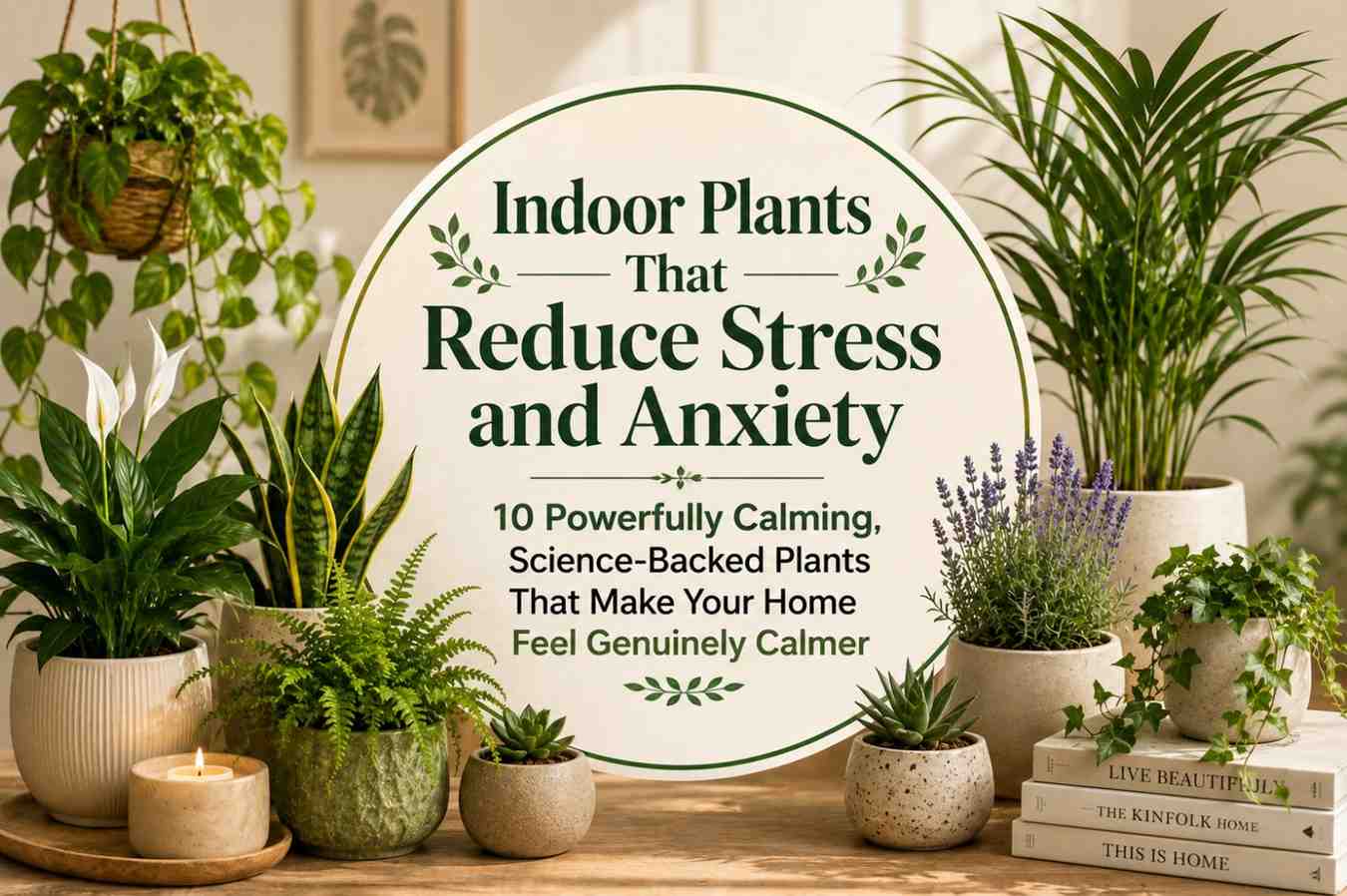
Introduction
The science is in, and it is compelling: indoor plants that reduce stress and anxiety are not a wellness trend—they are a clinically supported intervention. Research from environmental psychology, horticultural therapy, and neuroscience all converge on the same conclusion: living with plants changes how your brain responds to stress, and some species are dramatically more effective than others.
In India’s fast-paced urban centers, stress and anxiety are at record highs. A 2024 report by NIMHANS (National Institute of Mental Health and Neurosciences) found that over 47% of working urban adults reported clinically significant stress levels. Against this backdrop, the search for natural, affordable, and evidence-based interventions has made indoor plants that reduce stress and anxiety one of the most researched areas in environmental psychology. And the findings are remarkable.
Plants influence our nervous systems through multiple pathways—by purifying air, by engaging our parasympathetic “rest and digest” response through visual contact with nature, by releasing phytoncides (airborne plant chemicals with measurable calming effects), and by giving us a gentle, consistent care routine that builds mindful attention. Indoor plants that reduce stress and anxiety work not just because they look good but because they actively interact with our biology.
Related Post:How to Style Indoor Plants Like a Designer 2026 Sculptural Pots & Layered Greenery Ideas That Transform Any Room
The Science Behind Indoor Plants That Reduce Stress and Anxiety
A landmark study published in the Journal of Physiological Anthropology found that interacting with indoor plants that reduce stress and anxiety — even briefly touching their soil or leaves — significantly reduced cortisol levels (the body’s primary stress hormone) compared to computer-based tasks. A separate study from the University of Exeter found that office workers with plants nearby reported 37% fewer self-reported anxiety symptoms and 15% higher productivity.
The Japanese practice of Shinrin-yoku (forest bathing) has inspired a growing body of research into indoor plants that reduce stress and anxiety as proxies for nature exposure in urban environments. Even small doses of plant contact—a pot on a desk, a trailing plant at eye level—trigger measurable changes in heart rate variability, blood pressure, and self-reported mood.
10 Best Indoor Plants That Reduce Stress and Anxiety (Science-Backed)
🌿 1. Lavender
The gold standard of calming plants. Linalool compounds in lavender are proven to reduce anxiety markers. One of the best indoor plants that reduces stress and anxiety through scent alone.
🍃 2. Snake Plant
Releases oxygen at night, improving sleep quality. A 2023 NASA-updated study confirmed snake plants as top air-purifying indoor plants that reduce stress and anxiety through improved air quality.
🌵 3. Aloe Vera
Emits calming volatile compounds and requires minimal care — the care routine itself is therapeutic. A perfect entry-level choice among indoor plants that reduce stress and anxiety.
🌸 4. Peace Lily
Reduces airborne mold spores and VOCs by up to 60%. Studies show that visual contact with flowering indoor plants that reduce stress and anxiety activates reward centers in the brain.
🌱 5. Spider Plant
Removes formaldehyde and carbon monoxide with extraordinary efficiency. Spider plants are among the most effective indoor plants that reduce stress and anxiety through air purification.
🌿 6. Pothos
Almost impossible to kill, making it ideal for anxious plant parents. The trailing vines of pothos create a visually soothing, organic flow—essential among indoor plants that reduce stress and anxiety through visual calm.
🎋 7. Bamboo Palm
Adds humidity and generates a gentle rustling sound in air-conditioned rooms. Sound therapy research supports soft, natural sounds as significant indoor plants that reduce stress and anxiety contributors.
🌺 8. Jasmine
The scent of jasmine has been shown in clinical studies to be as effective as a mild sedative in reducing anxiety levels. Among indoor plants that reduce stress and anxiety, jasmine works fastest through its fragrance.
💜 9. Rosemary
Inhaling rosemary’s aroma has been shown to reduce cortisol levels by up to 23%. One of the most research-validated indoor plants that reduce stress and anxiety through aromatherapy is the lavender plant.
🌼 10. Chrysanthemum
A powerful benzene and ammonia remover. Bright colors of chrysanthemums also activate the brain’s mood-elevating circuits, making them effective indoor plants that reduce stress and anxiety visually.
Related Post:How to Style Indoor Plants Like a Designer 2026 Sculptural Pots & Layered Greenery Ideas That Transform Any Room
How Indoor Plants That Reduce Stress and Anxiety Work in Your Body
Understanding the mechanism behind indoor plants that reduce stress and anxiety helps you place them more strategically. There are five primary pathways through which plants act on the human stress response:
- Olfactory pathway — Aromatic plants (lavender, jasmine, rosemary) release volatile organic compounds that bind to receptors in the limbic system, directly modulating the emotional brain. These are the fastest-acting indoor plants that reduce stress and anxiety.
- Visual pathway — The mere sight of natural forms, soft leaf shapes, and organic movement triggers the parasympathetic nervous system. Research calls this “soft fascination”—the gentle, effortless attention we give nature reduces cognitive fatigue.
- Air quality pathway — VOC-removing indoor plants that reduce stress and anxiety improve oxygen levels, reduce headaches, and lower irritability — all of which directly reduce the body’s baseline stress load.
- Horticultural therapy pathway—The act of caring for plants—watering, pruning, and repotting—is a form of mindfulness practice. It anchors attention to the present moment, interrupting rumination cycles that drive anxiety.
- Microbiome pathway—Emerging research suggests that soil microbes (particularly Mycobacterium vaccae) inhaled from plant pots may trigger serotonin production—a genuinely surprising mechanism behind how indoor plants that reduce stress and anxiety work at a biochemical level.
Related Post: Snake Plant Varieties India 2026 — Pagoda Tower, Hedgehog & 8 Brilliant New Cultivars Worth Adding to Your Collection
Where to Place Indoor Plants That Reduce Stress and Anxiety in Your Home
Strategic placement amplifies the benefits of indoor plants that reduce stress and anxiety. Here is a room-by-room guide tailored to Indian homes:
| Room | Best Plant | Primary Benefit |
|---|---|---|
| Bedroom | Snake plant, Lavender | Improved sleep, reduced cortisol |
| Home office / Study | Rosemary, Spider plant | Focus, reduced mental fatigue |
| Living room | Peace lily, Pothos | Air purification, visual calm |
| Kitchen | Aloe vera, Basil | Practical calm, aromatherapy |
| Bathroom | Bamboo palm, Ferns | Humidity balance, spa-like calm |
| Balcony / Entrance | Jasmine, Chrysanthemum | Mood elevation, welcoming scent |
🧠 For Anxiety Specifically If your primary concern is anxiety (rather than general stress), prioritize aromatic indoor plants that reduce stress and anxiety: lavender in the bedroom, jasmine near the entrance, and rosemary in your study. The olfactory pathway is the fastest route to the emotional brain and the most consistently supported in clinical research on indoor plants that reduce stress and anxiety.
Building a Wellness Plant Routine Around Indoor Plants That Reduce Stress and Anxiety
The most powerful use of indoor plants that reduce stress and anxiety goes beyond passive placement. Creating a brief, daily plant care ritual — five to ten minutes of mindful engagement with your plants each morning — has been shown in horticultural therapy research to significantly reduce anxiety scores over a six-week period. Water a plant, remove a dead leaf, and mist a fern. The routine becomes a moving meditation, and the indoor plants that reduce stress and anxiety become anchors for that practice.
As India’s mental health conversation continues to open up in 2026, the integration of nature into therapeutic and everyday home environments is gaining mainstream recognition. Indoor plants that reduce stress and anxiety are not a replacement for professional mental health support, but they are a meaningful, evidence-based, and deeply human complement to it—one that has been used for thousands of years across cultures and is now being validated with the rigor of modern neuroscience.
❓ Frequently Asked Questions
Do indoor plants really help with anxiety? Yes. Multiple peer-reviewed studies confirm that indoor plants that reduce stress and anxiety do so through measurable physiological mechanisms—including cortisol reduction, improved air quality, and parasympathetic nervous system activation.
Which plant is best for reducing stress in a bedroom? Lavender and snake plants are the two most research-supported indoor plants that reduce stress and anxiety in sleep environments. Lavender through scent and snake plants through nocturnal oxygen release and VOC removal.
How many plants do I need for a noticeable calming effect? Research suggests that even one or two well-placed indoor plants that reduce stress and anxiety produce measurable benefits. However, the effect scales—a study found that 3–5 plants per room produced the most significant anxiety reduction outcomes.
Are fragrant indoor plants safe for people with asthma? Most aromatic indoor plants that reduce stress and anxiety are safe for asthma sufferers. However, heavily fragrant plants like jasmine can occasionally trigger sensitivities. Start with lavender, which has the mildest and most consistently tolerated scent profile.
Can plants help with work-from-home stress? Absolutely. A University of Exeter study specifically linked desk plants to a 37% reduction in self-reported anxiety in home office settings. Rosemary, spider plants, and peace lilies are the most effective indoor plants that reduce stress and anxiety for work-from-home environments.
Related Post: Snake Plant Varieties India 2026 — Pagoda Tower, Hedgehog & 8 Brilliant New Cultivars Worth Adding to Your Collection
🌿 Conclusion
The evidence is clear and growing: indoor plants that reduce stress and anxiety are one of the most accessible, beautiful, and genuinely effective tools we have for improving our daily mental well-being. From the air-purifying power of snake plants and spider plants to the neurochemical magic of lavender and jasmine, nature has quietly been offering us this therapy all along.
In a world that grows louder and more demanding by the year, cultivating a home filled with indoor plants that reduce stress and anxiety is not a luxury — it is an act of self-care. Start with one plant in your bedroom tonight. Notice how you feel in a week. Then let your collection, and your calm, grow from there.