 editer@organickheti.in
There’s something extraordinary about walking to your balcony, snipping fresh coriander, plucking a ripe chili, and tasting a tomato still warm from the plant. It’s not just food — it’s the deepest connection you can have with what you eat.
Building an organic kitchen garden in India in 2026 is within reach of every Indian household—whether you have a sprawling backyard in Lucknow or a south-facing balcony in a Mumbai high-rise. You don’t need expensive equipment, special skills, or a green thumb. You need the right plan, the right plants, and the right organic techniques.
This comprehensive guide gives you everything you need to grow pesticide-free vegetables from seed to plate in your own home this season.
Why Every Indian Home Needs an Organic Kitchen Garden in 2026
The case for an organic kitchen garden in India in 2026 has never been stronger:
Food Safety Crisis — A 2023 FSSAI study found pesticide residues in over 30% of sampled vegetables in Indian markets. Leafy vegetables, tomatoes, and chilies were most affected.
Rising Vegetable Prices — Inflation has pushed vegetable prices to record highs. Growing even 30–40% of your family’s vegetable needs saves thousands of rupees annually.
Nutrition — Studies show homegrown vegetables are consumed within hours of harvest, retaining 40–60% more vitamins than market vegetables that are days or weeks old.
Sustainability — Each home garden reduces dependence on chemically farmed commercial produce and contributes to local food security.
Connection and Wellbeing—Gardening reduces cortisol (stress hormone) levels, improves mood, and provides gentle daily exercise.
Planning Your Organic Kitchen Garden in India in 2026
Step 1: Assess Your Space
Before buying a single seed, honestly evaluate your available growing space:
Balcony gardening (most common for urban India):
- Measure your balcony size in square feet
- Note how many hours of direct sunlight it receives (minimum 4 hours needed, 6+ ideal)
- Check weight limits if on upper floors (grow bags are lighter than clay pots)
- Note which direction it faces (south-facing = most sun in India)
Terrace gardening:
- Check terrace weight limits with building management
- Plan a waterproofing membrane under raised beds (to protect roof)
- Assess wind exposure (strong wind desiccates plants—use shade netting on windy sides)
Kitchen windowsill:
- Perfect for herbs only (coriander, mint, methi)
- Needs minimum 3–4 hours of direct sun
Backyard or small plot:
- Create raised beds for best results
- Plan pathways for access without compacting soil
Step 2: Choose Your Growing Method
| Method | Space Needed | Best For | Investment |
|---|---|---|---|
| Grow bags | 1 sq ft per bag | Balconies, terraces | ₹10–30 per bag |
| Plastic containers | 1–2 sq ft per pot | All spaces | ₹50–200 per pot |
| Raised wooden beds | 32 sq ft minimum | Terraces, backyards | ₹2,000–5,000 |
| Ground beds | Large garden | Homes with land | ₹500–2,000 |
| Vertical garden | 4 sq ft wall space | Small balconies | ₹500–3,000 |
What to Grow in Your Organic Kitchen Garden in India in 2026
Choose plants based on your family’s actual eating habits. There’s no point growing bitter gourd if your family won’t eat it!
Category 1: Daily Use Herbs (Start Here — Easiest ROI)
Coriander (Dhania) — Used in virtually every Indian meal. Grows in 20 days. Re-seed every 3 weeks for a continuous supply.
Mint (Pudina) — Grows aggressively in any container. Perfect for chutney, chaas, and tea. Plant once, harvest forever.
Curry Leaves (Kadi Patta) — A slow-growing but low-maintenance perennial. Every South Indian household should grow this.
Methi (fenugreek)—Incredibly fast (ready in 20 days). Great for parathas, dal, and saag. Very high in iron.
Tulsi—not just culinary—medicinal, pest-repelling, and sacred. Grows easily in any pot.
Category 2: Fast-Growing Vegetables (Harvest within 60 days)
Spinach (Palak)—Nutritional powerhouse. Ready in 25–30 days. Grow in a 12-inch pot.
Radish (Mooli)—Ready in just 25–35 days. Needs a deep pot (12+ inches). Great for winters.
Lady’s Finger (Bhindi) — Thrives in Indian heat. Ready in 50–60 days. One of the most productive balcony crops.
Green Beans (Sem)—Climbing variety saves space. Heavy producer over 2 months.
Chilies—Every Indian garden essential. Long-producing (months of harvest from one plant). Very low maintenance once established.
Category 3: Medium-Effort Crops (60–90 days)
Tomatoes—the king of the kitchen garden. Cherry tomato varieties are best for containers. Heavy producer, high value.
Brinjal (Baingan)—Loves Indian heat. Very productive from a single plant. Multiple harvests over 3–4 months.
Cucumber (Kheera) — Train on a trellis to save space. Fruits abound in warm weather.
Capsicum (Bell Pepper) — Colorful, nutritious, and expensive to buy in markets. Grow them organically at home.
Building Your Organic Kitchen Garden Soil Mix
The secret to a successful organic kitchen garden in India in 2026 is a living, nutrient-rich soil ecosystem.
The Ultimate Organic Potting Mix:
- 40% garden soil or red soil
- 25% vermicompost
- 25% peat
- 10% river sand or perlite
For each 10-liter pot or grow bag, also add:
- 100g neem cake (pest control)
- 1 handful crushed eggshells (calcium)
- 50g wood ash (potassium)
This mix provides everything your plants need for the first 6–8 weeks. After that, supplement with liquid fertilizers and vermicompost top-dressings.
Seed Starting: From Packet to Seedling
Direct Sowing (Easiest)
Some plants prefer to be sown directly into their final container:
- Coriander, methi, spinach, radish, moong, cowpea—sow directly
How: Make shallow furrows (1 cm deep), sow seeds, cover lightly with soil, and water gently.
Seed Trays / Nursery Trays (For Transplants)
Tomatoes, chilies, capsicum, and brinjal germinate best in seed trays before transplanting.
How:
- Fill tray cells with coco peat + vermicompost (50:50)
- Sow 1–2 seeds per cell, 1 cm deep
- Cover lightly, water gently
- Keep in warm spot (25–30°C)
- Seeds germinate in 5–10 days
- Transplant when seedlings have 2–3 true leaves (about 3–4 weeks)
The Organic Kitchen Garden Maintenance Routine
A successful organic kitchen garden in India in 2026 requires just 15–20 minutes of daily care:
Daily (5 minutes):
- Check soil moisture—water if top inch is dry
- Quick visual inspection for pests or disease signs
Weekly (15 minutes):
- Apply neem oil spray (preventive pest control)
- Remove yellowing or diseased leaves
- Check if any plants need support/tying
Monthly (30 minutes):
- Top-dress pots with vermicompost
- Apply liquid fertilizer (banana peel tea / compost tea)
- Re-sow fast-growing crops (coriander, fenugreek) for continuous harvest
- Clean grow bags and pots of any debris
Seasonal Planting Guide for Your Kitchen Garden
| Season | Best Months | What to Plant |
|---|---|---|
| Winter (Rabi) | October–February | Spinach, methi, coriander, tomatoes, radish, peas, carrots, capsicum |
| Summer | March–May | Bhindi, chillies (transplant), cucumber, beans |
| Monsoon (Kharif) | June–September | Brinjal, pumpkin, gourds, beans, amaranth |
| Transition | Feb–March, Sept–Oct | Herbs, quick leafy greens |
For most beginners starting their organic kitchen garden in India in 2026, October is the ideal month to begin—the cooler Rabi season makes growing easier, pest pressure is lower, and a wide variety of crops are available.
Common Kitchen Garden Problems and Organic Solutions
Yellow leaves: Usually nitrogen deficiency. Apply liquid compost tea or vermicompost top dressing.
Leggy, weak seedlings: Insufficient sunlight. Move to a sunnier spot or add reflective material on the non-sunny side.
Wilting despite watering: Possible root rot (overwatering) or extreme heat. Check drainage; increase shade on hottest days.
No flowers or fruit: Pollination problem or potassium deficiency. Gently shake flowering plants daily to aid pollination; apply banana peel fertilizer.
Pest attack: Apply neem oil spray immediately; inspect daily.
Estimating Yield from Your Kitchen Garden
| Crop | Container Size | Expected Yield |
|---|---|---|
| Tomatoes (cherry) | 12-litre grow bag | 2–4 kg per season |
| Chillies | 10-litre pot | 200–500g over 4–5 months |
| Bhindi | 15-litre grow bag | 500g–1kg per plant |
| Spinach | 10-litre pot | 200–300g per harvest (multiple harvests) |
| Coriander | 8-litre pot | 100–150g per harvest |
| Cucumber | 15-litre grow bag + trellis | 3–5 fruits per plant |
Even a 10-pot organic kitchen garden in India in 2026 can supply 30–50% of an average Indian family’s herb and leafy vegetable needs.
IMAGE SUGGESTION 1:
Placement: After the “What to Grow” section Description: Colourful Indian balcony kitchen garden with grow bags of tomatoes, chillies, herbs, and spinach in morning sunlight ALT Text: “organic kitchen garden India 2026—balcony grow bags with tomatoes, chilies, and herbs”
IMAGE SUGGESTION 2:
Placement: After the seasonal planting guide Description: Assorted freshly harvested organic vegetables from home garden laid on a wooden surface—tomatoes, chillies, spinach, coriander ALT Text: “organic kitchen garden India 2026—freshly harvested pesticide-free vegetables from home”
Authority External Resources
- National Horticulture Board India—Official resource for Indian horticulture, including kitchen garden programs.
- ICAR — Kitchen Garden Guide — Research-based kitchen gardening guidance for Indian conditions.
- Krishi Jagran Kitchen Garden — India’s leading agricultural media with practical kitchen garden articles.
- National Centre of Organic Farming — Official government organic farming standards and techniques.
- FAO — Urban Food Gardens — Global resource on urban and home food production.
FAQs: Organic Kitchen Garden India 2026
Q1. How much space do I need for an organic kitchen garden in India in 2026?
You can start a productive kitchen garden in as little as 10–15 square feet of balcony space using grow bags. Even 6–8 pots on a sunny windowsill or small balcony can supply a family’s weekly herb needs and some vegetables.
Q2. Which vegetables give the highest yield per pot for Indian kitchens?
Cherry tomatoes, chilies, bhindi, and brinjal give exceptional yield per pot. For the highest value per square foot, chiles are outstanding—one plant can produce hundreds of chiles over a 4–6 month season, saving you significant money.
Q3. How do I prevent my kitchen garden vegetables from being eaten by birds?
Cover plants with lightweight bird netting (available at nurseries for ₹50–100 per meter). Alternatively, hang old CDs or reflective strips near the garden—the movement and light reflection deter birds without harming them.
Q4. Can I grow vegetables year-round in an Indian kitchen garden in India in 2026?
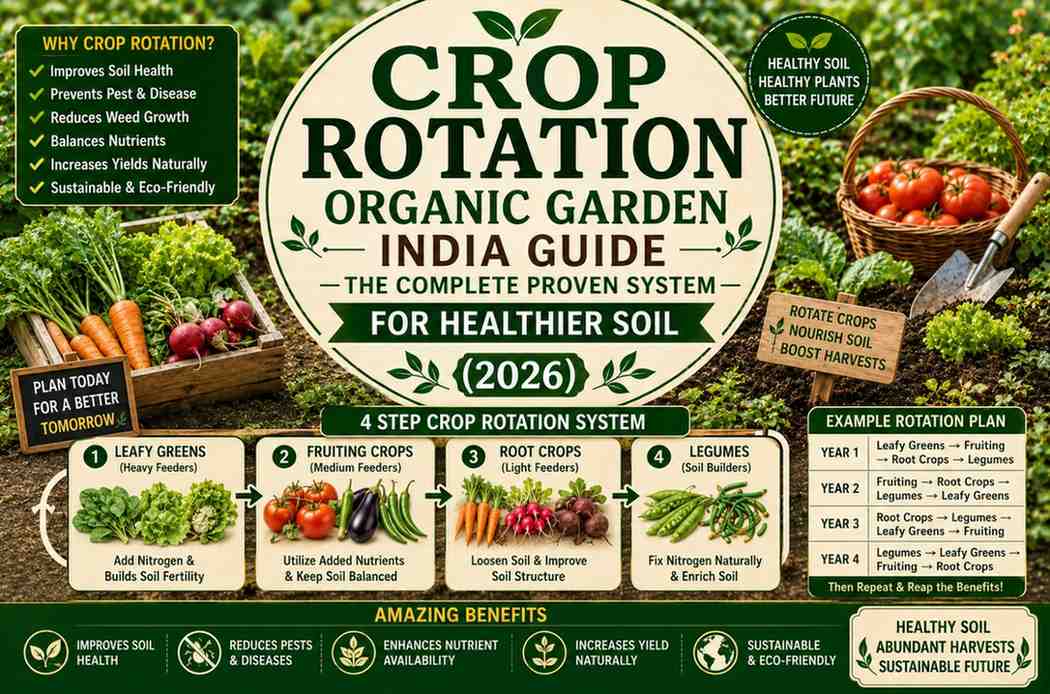
Yes! India’s climate allows for year-round gardening if you match crops to seasons. During summer, grow heat lovers like bhindi and chilies. In winter, grow tomatoes, spinach, and methi. Keep herbs going year-round. Plan your crop rotation to always have something growing.
Q5. How much can I save by growing my own vegetables organically?
Based on current Indian market prices, a well-maintained 15-pot kitchen garden can save ₹1,500–₹3,000 per month on herbs and vegetables. The annual saving easily offsets the initial setup cost within the first 2–3 months.
Conclusion
An organic kitchen garden in India in 2026 is the most direct, practical, and rewarding step you can take toward food sovereignty, health, and sustainability.
It starts small—a few pots of coriander, a grow bag of chilies, a tomato plant on your balcony—and grows into a productive, living ecosystem that feeds your family clean, nutritious, pesticide-free food every single day.
This is not just gardening. It’s reclaiming your right to safe food. Start with three pots, three types of seeds, and three weeks of patience—and your organic kitchen garden India 2026 will reward you more than you ever imagined.